Attending a Saturday morning tree-planting demonstration does not appeal to the masses. But it appealed to this arbor nerd. I enrolled with vigor, anxious to learn how to properly plant a maple in the dry Coloradan soil. The instructors harped on the dangers of tree staking and overwatering. But it turned especially riveting when the topic turned to pruning. Our affable instructor shifted to a somber tone and lowered his voice almost to a whisper, like a lieutenant preparing his troops for a ruthless adversary:
Trees in Colorado want to become bushes. And if given the opportunity to do so, that is exactly what they’ll do. It is easier for them to grow wide instead of tall. Simply stated, it’s your job to not let that happen.
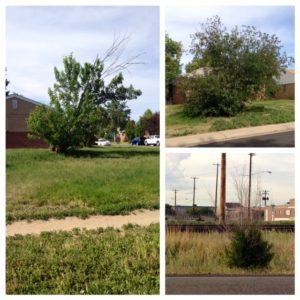
For a tree to push nutrients from the roots to the farthest branches is hard work. It is more energy-intensive than simply pushing through saplings near the root system. Trees circumvent the strenuous work by taking the short route (if allowed to do so). I began to see this evidenced in lawns and parks across the city. Like trees with no trunks, these poor plants suffered stunting of unsightly varieties. They did not blossom into stately sycamores or flowering poplars. Instead, they appeared trapped between life as a tree and life as a shrub.
Not long after the seminar I had my own showdown with “suckers,” these sapling-sprouts that aimed to alter the trajectory of my silver maple. Armed with the pruning artillery to bring the foe to justice, I made quick work of the intruders. And today those trees are on the path to maturity.
Next week, Alli and I board a flight for our first visit to Rwanda. Rwanda suffered one of the gravest tragedies of our lifetimes. The genocide of 1994 nearly sunk the African nation that was already plagued with poverty. But it was at this rock-bottom moment when the Rwandan people averted the paths chosen by many of their neighbors. Where elsewhere corruption and racism were given the freedom to flourish, Rwanda’s leaders pruned them aggressively.
Source: Viriginia Tech University
Today Rwanda surges into a nation of opportunity. Like a tree unencumbered by growth-inhibiting suckers, Rwanda stands tall. Prime ministers, dictators, and aristocrats watch astonishingly as poverty rates plummet and business investment soars. Through clear and aggressive reform, Rwanda is free to flourish. And it is beautiful to observe. Yes, pruning work still remains, but there is no denying the identity of this country. It is not to be confused with the failing states that border it. Rwanda is a thriving tree, on the course to becoming what its people want her to be.
It’s the time of year, as they say, when spring is in the air. Mower engines rattle off their winter slumber. The garden store feels like Macy’s at Christmastime. Gardeners plot their strategies. And spring acts like therapy for this office-bound professional. Seeding grass and spreading mulch enliven me, but ‘tis the grand oaks and aspiring saplings I love the most. Trees: The lions of the vegetative kingdom.
I can’t recollect when I discovered my inner-arborist. But, I quickly learned that planting a tree is not easy work, especially in Colorado’s clay soil. Some experts (or at least a few “old wives”) instruct us to stake our new trees into the ground, protecting them from strong winds and the dangerous world beyond the warm embrace of the nursery. But if you want a strong tree, you’re wise to ignore that advice, no matter the depth of your sympathies.
Source: TLCforTrees.info
In her dissident research paper, The Myth of Staking, Dr. Linda Chalker-Scott took on powerbrokers and entrenched tree stake interest groups, saying:
Tree staking is done with the best of intentions but without regard to long-term tree health. Rather than helping a tree develop root and trunk growth that allow it to stand independently, improper tree staking replaces a supportive trunk and root system. This artificial support causes the tree to put its resources into growing taller but not growing wider. When the stakes are removed (if they ever are), the lack of trunk and root development makes these trees prime candidates for breakage or blow-down.
While Chalker-Scott allows staking in some instances—namely for exceptionally top-heavy trees—she never permits it for longer than one growing season. Wait longer, and any short-term benefits will be awash in long-term issues because of the stunted root system. Fine Gardener, the moral authority on all flora matters, goes even farther and warns that, “Staking a tree…can do more harm than good.”
When the wind howls and the rain falls, the young tree’s roots react and push deeper into the soil. The winds make it stronger. In contrast, staked trees do not fully mature, despite their stability. What saplings need more than protection is the opportunity to grow. To stand on their own roots. Provide your tree that chance along with healthy doses of sunshine and water and watch it thrive.
If our Creator embedded the anatomy and ability in trees to flourish, certainly He has created all people with the innate capacity to do the same. It prompts us to examine how we stake versus how we water. With our kids, friends, needy neighbors and the poor around the world: Are we staking or watering? The costs are too high to avoid the question. Let’s call a stake a stake and get into the business of helping people grow as their Creator designed.
I pulled the same prank every week. I knew it and Darla knew it, but that didn’t stop us from repeating it. There was one reason I continued to covertly “steal” Darla’s bowling ball: Her response. When the prank was up, her laugh enlivened the dark bowling alley. But if the alarming trend continues, far fewer of us will know people like her. Darla lives with Down syndrome, a medical condition our society is attempting to erase.
Saturday mornings during college, I volunteered with the Special Olympics bowling league and track club. And it was Darla’s charm that acted like an unsnoozable alarm clock whenever I considered shirking my volunteer commitment. Her big hugs and contagious smiles greeted everyone she met, and they were the highlight of my week.
Darla
When I finished college and moved away from Indiana, Darla’s embrace faded from my memory. But her smile resurfaced and branded itself on my heart when I read Cade’s story and learned that 92 out of 100 babies diagnosed with Down syndrome are aborted. I grew up in a special needs family and grieve that 92% of these families will not experience this unexpected and overwhelming joy.
Last week, my family visited the Denver Aquarium. While there, I saw a young boy with Downs who clamored for a good view of a tropical fish tank. Nobody in the aquarium matched his delight. He saw the world with unfiltered enthusiasm, his imagination captured by the brightly colored fish darting and twisting through the water. The little boy at the aquarium doesn’t know me, but he captivated my imagination with his whimsy.
We characterize people with Down syndrome by their challenges—much like we portray people in poverty by their problems. I’m so glad I’m not identified by what ails me. Chris? He’s the guy that is overly concerned by what other people think of him. Or, Chris? Oh, he’s a “considers-his-own-needs-above-all-others” type of guy. Thankfully, I’m just Chris.
We purge the richness of God’s marvelous creativity by telling thousands of babies that they do not deserve a stake in our society because of their uniqueness. Darla, Cade, the boy at the aquarium, and their many courageous friends are not problems in need of a solution. Darla is a woman who spreads optimism in spite of adversity. The boy at the aquarium reminds us to marvel at the beauty in our world. People worth celebrating and worth protecting.
The battle rages on. Across the globe, forces for good assault a great evil–human traffickers. Ruthless, shifty and complex, our formidable opponent lurks in red-light districts and shantytowns.
“More children, women and men are held in slavery right now than over the course of the entire trans-Atlantic slave trade…generating profits in excess of 32 billion dollars a year [GDP of Costa Rica] for those who, by force and deception, sell human lives into slavery and sexual bondage. Nearly 2 million children [population of Houston] are exploited in the commercial sex industry.” – International Justice Mission (IJM)
Leaders rally coalitions to combat villains who perpetrate these crimes on innocent children. Pioneers like IJM and Not For Sale convene activists and churches to fight this injustice. Together, they bring freedom to the darkest corners of our world. I pray these organizations grow. I pray justice is served. I rejoice with each girl whose chains of bondage break. And, I mourn to think of the many who are not yet free.
These pioneers are not without allies, however. On the front lines, a quiet hero is emerging. Inconspicuous, yet powerful, their chief ally wages war often without even knowing it.
Our hero? A good job.
Perpetrators rarely kidnap girls off street corners. More often, they lure girls into slavery with job offers. This explains why the poorest neighborhoods in the poorest countries are at greatest risk. Traffickers swarm in slums, offering parents a shot at prosperity. Give me your girl and I’ll get her a call center job across the border. They bait desperate families with financial opportunity.
Poor families are the bull’s eye for traffickers. Fewer poor families means fewer girls sold into slavery. How many parents in your neighborhood have gifted their daughters away to job placement agencies? Traffickers ignore our towns because our families aren’t starving.
Last month, I visited HOPE’s work in southern Asia. We work in a city known as a regional hub for the trafficking industry. I met with dollar-a-day families in slums throughout the city, watching our local staff breathe life into the oppressed. James, our country director, hates that his city is a target.
“We train the 6,000 families we serve how to spot a trafficker. And we help them start and grow businesses so the trafficker’s bait is irrelevant,” Jon told me.
HOPE International clients
Motivated by his faith to bless an at-risk place, my friend, Rick, recently opened the doors of a “trafficking-fighting agency” (pictured below) in another trafficking hotspot, Vietnam. This agency, a manufacturing facility, employs over 100 Vietnamese people. Linh, a beautiful young woman who was trapped in prostitution, now manufactures medical devices. She left a career of slavery for a life of freedom. The job changed her course forever.
Rick’s “Trafficking-Fighting Agency”
The CEO of a medical devices business, Rick doesn’t sign petitions and he doesn’t raid brothels. Instead, he creates opportunities for dozens of people to engage in dignifying work. His business provides an upstream, economic solution to an economic problem by putting traffickers out of business.
“I think our Vietnam operation will surprise us and become more than we’ve dreamt. We reflect Christ’s purposes in this place: To be God’s instruments to reclaim, to reconcile, and to redeem. To make all things new. That’s why we are here.” – Rick
In the war against trafficking, we need to deploy more than activists. We need to deploy an even greater force against our imposing foe. We need to unleash our secret heroes—the job creators. We need to affirm the big businesses, mom-and-pop shops, and social enterprises that create good jobs. We need to unlock the creativity of the human spirit to build new job machines, enterprises that strike the engine of the trafficking industry. We put the very fear of God in the heart of evil when freedom-fighters like IJM join arms with freedom-fighting job creators like Rick and HOPE International.
My wife and I often visit our friends in Breckenridge, Colorado. We love the beauty of the mountains and enjoy our friends immensely. Their 8-year old son, Nathan, is a terrific source of entertainment. During a recent dinner conversation, Nathan informed us about his Little League baseball season. He rattled off the scores of his team’s last few games. His parents quickly stopped him, interjecting that the league and coaches don’t actually keep track of scores.
Nathan retorted, “We all keep score anyway. We always keep score.”
I smiled, thinking back to my own youth baseball experience when I did the exact same thing. Sure there were no scoreboards, but every single kid on the diamond knew the score. Why? Because we want to know how we’re doing. It’s more than just winning and losing. We want a tangible measure of our performance. Are we succeeding? Are we catching up? How bad is it? Keeping score answers those questions.
In working with the poor, many times it’s easy to justify not keeping score. After all, we’re trying to help people. Isn’t that enough? I’m not sure it is. I think we need to keep score. It’s not about knowing if we’re winning. Even if the score illuminates we are losing, at least we have a gauge of how we’re doing.
It is particularly challenging to measure spiritual impact. At HOPE, it is straightforward to track financial metrics. We measure repayment rates, savings balances, client retention and a slew of other data points. It is much more challenging to gauge whether our work impacts the spiritual climate of the communities and families we serve. It’s hard and it’s also controversial to suggest we can measure spiritual impact when we know that only God sees the heart.
This month, a conference with a bold title—Spiritual Metrics—is gathering to discuss these issues. I believe it is possible and critical that we measure our spiritual impact. While we can only “see in a mirror dimly,” dimly is better than not at all.
We aren’t perfect in our measurement, but at least we know how many clients have been given a copy of God’s word, how consistently our staff gathers for devotions, and how many churches we actively partner with. It takes creativity, but per the old management axiom, what gets measured gets done. We need to keep score to remain accountable to what we are uniquely positioned to do as Christian organizations. Just like Nathan’s baseball team, we need to keep score.