
by Chris Horst | Sep 21, 2011 | Blog |
Tourists flock to Lancaster County to experience the magic of this agrarian hotspot. Lumbering dairy cows, hard-working Amish farmers and roadside produce vendors breathe life into Pennsylvania Dutch Country. The picturesque farmland makes for more than great postcards, however. The land is Lancaster’s most-treasured asset. The rich soil and bountiful nutrients create the perfect environment for farmers. Most years. This summer was unkind.
Pennsylvania Dutch Country
The headlines on July 25 tell the story: “Extreme heat, lack of rain leaves Lancaster County’s crops withering in the fields.”
An unusually dry summer distorted Lancaster’s reliable farming formula: It was all sun and no rain. Farmers watched the forecast daily, hoping for movement on the weather radar. One month later, the radar exploded with action. Hurricane Irene and the drenching storms that followed brought record-setting rain.
When the rain came, I cheered for farmers! The inches of precipitation brought sustenance to the struggling soybean sprouts and browning cornfields that desperately needed it. Contrary to my intuition, however, the farmers did not echo my cheers.
Jeff Graybill, a Lancaster agricultural expert, reflected on the rains saying it was “…too dry in the summer, and now there is far too much moisture than we need.”
The over-abundance of rain increased the chance of mold and diseases in crops and delayed farmers’ ability to plant fall crops. The same farmers who clamored for rain to come became desperate for the rain to stop. The much-needed gift arrived. But, too much came and it came too fast. It was too much of a good thing.
During the summer of 2008, Michael Spraggins took a trip to Burundi. The trip sobered Michael, a successful entrepreneur from Orlando, as he immediately felt the pain of the African nation. All around he saw every sort of brokenness, but the healthcare issues especially gripped his heart.
The people of Burundi, like the crops in Lancaster, were dying. Burundi needed “rain.” The pains needed to be addressed. And here was the critical moment. The moment when Michael confronted a desperate situation and committed to act. The moment when emotion often trumps good judgment.
“I descended onto the Burundian tarmac with handful of ideas that promised to change the health prospects of the poor in one of the world’s poorest countries,” Michael reflected.
Michael, armed with a toolbox full of solutions, arrived in Burundi. But, here was the crux. In this moment, he balanced his passion with discretion. Before launching his ideas, Michael learned that “most of those ideas were wrong.”
Before firing up the fundraising engine and rallying the church troops, he paused. He knew that even good gifts like healthcare can be delivered in ways that create more problems than they solve. Michael admitted that his ideas might bring flash floods instead of needed water. So, he endeavored to ask hard questions, to test his ideas, and to find solutions that bring lasting impact, like the type of rain that grows crops. Rain that is steady and measured.
When Michael stepped back from the urgent pain, he was surprised to discover an existing solution. “An unforeseen outcome of our original sustainability thesis was that the church-based clinic outperformed our other pilot clinics in providing the highest quality of care, to the most people, at the cheapest cost.”
Church-based medical clinics were Burundi’s best-kept healthcare secret. They far outperformed their peers and simply needed to be multiplied. So, Michael decided to do this through his upstart organization, LifeNet International. He could have sent rain like Irene sent Lancaster’s farmers; rain that fell too hard and too fast. Instead, he chose the path lined with humility. And that path is leading to a fruitful crop for the people of Burundi.

by Chris Horst | Aug 16, 2011 | Blog |
“You are the first American group to ever visit our community.” Simon’s words sent chills through the missions team that had ventured to his remote Kenyan village. It was a risk to come to such an isolated place, but its undiscovered magnetism was also its allure. Their arrival was a momentous step in a long journey.
Several years earlier, Simon* met these Colorado church leaders at a John Piper conference. They had an immediate kinship. It was hard not to love Simon: He was eminently likeable, oozing charisma with each handshake and smile. Now in Kenya, after months of careful planning, they had finally arrived. As their bus labored up the dusty driveway, the orphanage they knew only by pictures came to life.
The orphanage looked like many like it in Africa: A fenced-in compound with simply-constructed dormitories and classrooms. The zenith of the complex wasn’t its buildings, however. It was the 200 smiling children which greeted the visitors with hoots of delight when their bus arrived. The trip unfolded in typical fashion. The Coloradans spent their days playing with orphans, seizing photo opps, and dreaming with Simon about ways their church could help the orphanage flourish.
"The Vanishing Orphanage"
The trip rattled stereotypes and collided cultures. Simon orchestrated the trip with clockwork precision, his robust leadership skills firing on all cylinders throughout the week. As the trip came to a close, the bus drove the team away. The children chased their bus, wrenching the emotions of even the group’s most stoic members. Hearts full, the team flew home, now well-equipped to share their stories of helping orphaned children and exploring uncharted places.
Despite the many positive moments throughout the week, there were unnerving whisperings among the group. It was strange the teachers didn’t know many of the orphans’ names. It seemed overly-controlling when Simon prohibited them from visiting the neighboring village unaccompanied. Also odd, the orphanage lacked a garden, which is like an Alaskan lacking a snow shovel: The fertile soil can give anyone a green thumb. These quiet whisperings slowly unfolded into loud gasps, and then into protests, and then into many tears, when the group returned to visit Simon’s orphanage just one year later.
On their return trip—one which almost mirrored their previous trip—a team member, Dan, stayed around after the team departed for the States. On his own, Dan journeyed from the Nairobi airport back to the orphanage on a scout mission to investigate the team’s concerns. As he arrived in the village and walked toward the orphanage, a woman approached him, grabbed his arm, and amplified the whisperings.
“Just so you know,” she shared solemnly, “the orphanage is not real.”
Dan, panged with a haunting feeling of betrayal, trekked from the village to the orphanage, hoping to disprove her. He arrived at the place where he played with smiling children just one day earlier. His eyes confirmed the woman’s words: The place was deserted. The yard where the children used to run and play? Nothing remained apart from the lonely debris which bounced with the wind across the red clay earth. The sleeping quarters? Empty. The cafeteria? Vacant. No workers, no orphans, no supplies, no anything. The orphanage had vanished. It was all a mirage.
In truth, the Colorado church was not the first American group to visit Simon’s community. In fact, many churches from across the US and Canada were privy to Simon’s deceitful wooing over the years. His highly-sophisticated web of lies featured faux staff, rented children (he pitched it to their parents as a day camp), and staged arrests (always resulting in generous bail outs by the visitors). All told, this Madoffesque charity scheme collectively defrauded these churches of tens of thousands of dollars. More disappointing, it tainted many wonderful memories and fertilized the unhealthy seeds of cynicism and close-heartedness.
My first response to Simon’s elaborate scam was eye-rolling distrust. This type of story can cultivate skepticism, prompting us to pull back. But it doesn’t have to. It does not mandate that we retreat. In the face of even unbearable trials, Jesus prods us to advance, but to do so with eyes wide open:
Behold, I send you out as sheep in the midst of wolves; so be shrewd as serpents and innocent as doves. – Matthew 10: 16
Jesus’ instructions to his disciples preceded their harrowing journey to bring the good news to the world. He knew their path would be lined with hardship. Still, he sent them out, charging them to be as shrewd as they were innocent. Abounding in compassion, but not the undiscerning kind. Go to Kenya, but send back a scout if you sense something is amiss. Pour out generosity, but do so discriminately, taking Jesus’ instructions as your marching orders. Love abundantly, but always ask hard questions. Jesus sends us out. No retreat. No close fists. No bitterness. Go boldly, shrewd as serpents and innocent as doves.
*Names changed to protect confidentiality.
by Chris Horst | Jul 13, 2011 | Blog |
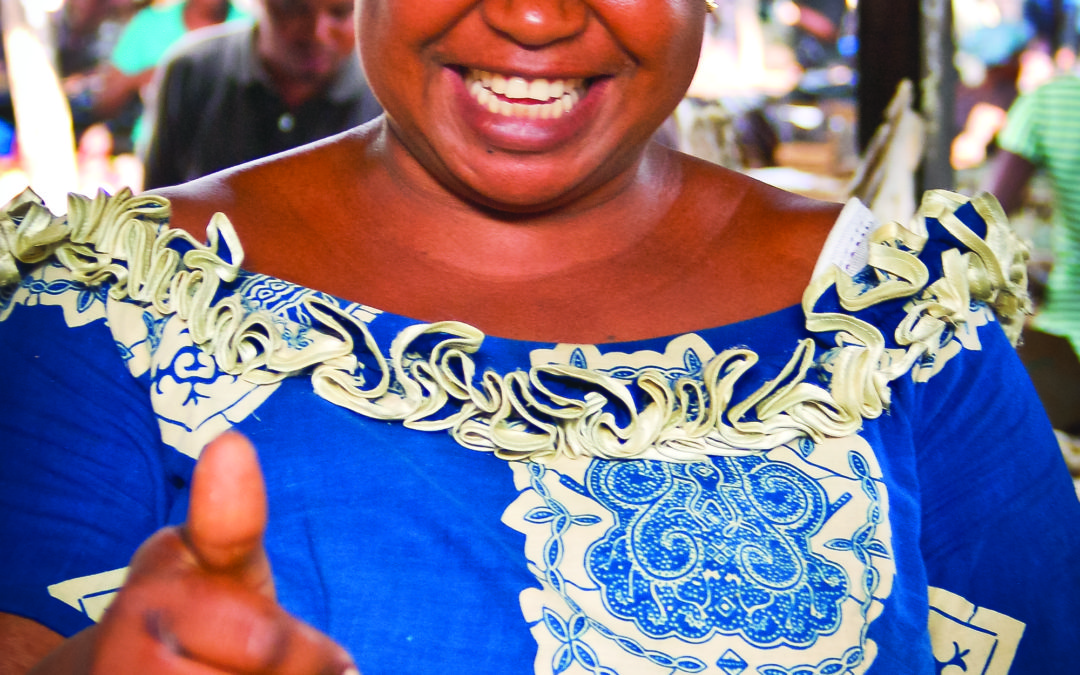
Lush vegetation creeps onto the roads wherever it’s permitted to do so. Tired political posters adorn the street signs, interrupting the brightly-painted buildings which line the crowded streetscape. Our bus darts through the tight thoroughfares in San Pedro, avoiding overtaxed motorcycles with nearly impossible precision. The streets teem with Dominican culture: Venders peddling just-picked-from-the-field sugarcane, scads of Chihuahuas scampering behind their owners and uniformed school kids winding through the bustle toward their classrooms.
I like it here. There is richness in the culture and authenticity in the people. My work has been the impetus for my recent travels here. Traveling with groups of HOPE donors, we visit the courageous Dominican entrepreneurs we serve throughout the country. Each trip looks different. The donors, entrepreneurs, and communities we visit are unique. I see new places and experience fresh stories. There is one theme, however, which connects all these trips. I’m not proud of it, but I’ve committed one regrettable act on every trip I’ve taken here, an act I’ve only recently even identified.
While navigating through the DR, we always stumble upon a sad neighborhood. These communities, normally labeled shanty towns, usually border sugarcane plantations and they reflect a much cloudier image of the spirited Caribbean culture. Like a dandelion-rich lawn on a well-manicured suburban street, these poor communities stick out. The evident material poverty is jarring. And it’s in these places—on every trip—where it happens: I slip out my camera and capture the misery. I find an especially forlorn-looking mom or a cobbled-together home (preferably both) and snap away.
These snapshots, illuminating the most desperate scenes I can find, become like trip trophies. They’re the type of pictures which make me feel guilty about complaining. About anything. They remind me of how nice my house is and how full my closets are and of just how very much I have. The pictures hold just a glimmer of redemptive value in this convicting power. But, when I snap these candids, I define those communities by what they lack. With each flicker of my camera lens, I make one more strike against those places, stamping them by their deficiencies.
Our charity is often the same. When given the option between defining people by what they have or by what they lack, we normally choose the latter. It’s easier to meet needs than it is to unlock potential. It’s quicker to heal wounds than to train doctors. It’s simpler to raise money to give stuff than for training to make stuff. But, I know I’d sure rather be known for what I do well than by what I lack.
The LORD your God is in your midst,
a mighty one who will save;
he will rejoice over you with gladness;
he will quiet you by his love;
he will exult over you with loud singing.
(Zephaniah 3:17 ESV)
I’m thrilled to serve a God who truly knows me. A God who does not define me by my weaknesses. A Creator who made me in his image. A Father who “exults” over me, his child. These truths convince me that If God and I sojourned across the Dominican together, his pictures would look strikingly different than mine.

snapshot of dignity
by Chris Horst | Jun 21, 2011 | Blog |
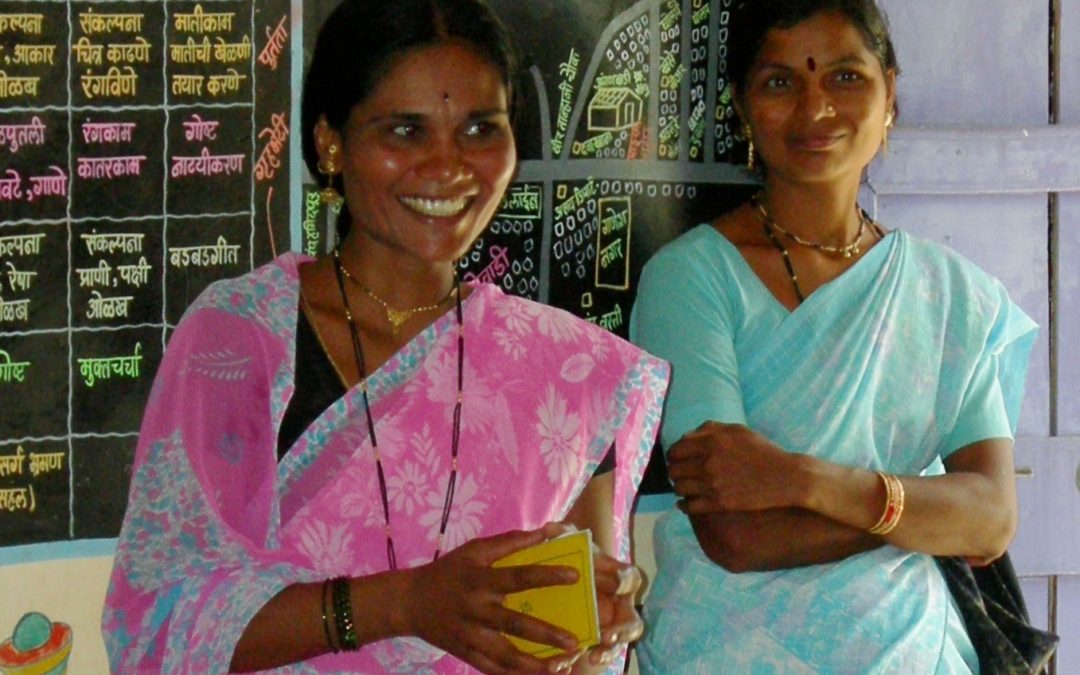
The New York Times published a disturbing report. They were clear on the “what” but silent on the “why.” They described an impending disaster, but did not prescribe any solutions. The man is freefalling without a parachute, they figuratively said, but they don’t know why he jumped or how to get him a parachute. They just know he’s falling. Fast.
The disaster is this: Eight million Indian girls were eliminated over the past 30 years because parents preferred boys to girls. Eight million people live in the state of Virginia. Eight million people inhabit Switzerland. Eight million Indian girls never reached their first birthday because they were girls. The fuel for this killing machine? Prosperity.
India’s increasing wealth and improving literacy are apparently contributing to a national crisis of “missing girls,” with the number of sex-selective abortions up sharply among more affluent, educated families during the past two decades, according to a new study…women from higher-income, better-educated families were far more likely than poorer women to abort a girl.
Incomes are increasing dramatically! …and parents can now afford ultrasounds to abort their girls. More Indian parents can read! …and their daughters will never reach kindergarten. People are educated! …and the world will never know the names of eight million girls.
We throw huge concerts to help the poor. We buy fair trade jewelry from global artisans. We petition our lawmakers to preserve foreign aid budgets. We travel to Africa on mission trips. We help the unfortunate to prosper. And for what? For this? Eight million silenced girls? Is this the goal of our attempts to help the vulnerable? To see them prosper and then choose to kill off the babies who lost the gender lottery?

We solve the problems of poverty and introduce the problems of prosperity. The New York Times lacked answers. They broke the news, but the story ends depressingly: “The problem has accelerated.” Apparently, this tragedy is at its genesis.
We need to fill hungry bellies and create jobs. We need to build houses and teach phonics. We are commanded to drill wells and bandage the wounded. However.
Jesus does not want us to stop there. You can own the whole world yet still have nothing, he said. These actions alone are not enough. Apart from the saving grace of Christ, prosperity produces new types of pain. Increased incomes means eight million less Indian girls. You won’t read it in the New York Times, but without Christ, our “giving back” is incomplete. If hearts don’t change; we create new disasters while we solve others.
—————————
The study estimated that 4-12 million girls (I used 8 as an estimate) have been aborted in India over the past 30 years. A different global study estimates that 163 million female babies have been aborted over the past 30 years by parents seeking sons.

by Chris Horst | Apr 20, 2011 | Blog |
Picture this scene: You are dining at a new restaurant. The server hastily distributes the plates and departs with a sarcastic, “Enjoy!” You sample each portion of the meal, but with every passing bite, your disappointment swells. The sautéed chicken is undercooked and flavorless. The corn risotto is pasty and infused with inexcusable quantities of black pepper. Wilting iceberg lettuce and gobs of artery-clogging dressing compose a poor façade of a salad.
As you dejectedly push the underwhelming plate away, the chef stops by your table for his customary check-in. “How’s the meal?” he asks.
You proceed to detail the substandard reality of the bad meal and poor service. In the middle of your complaint, the chef interjects with an outstretched hand.
“Before you go on, let me explain,” he says. “I need you to know something: I truly, honestly, attempted my very best on this meal. I made it especially for you and had actually hoped this would be the best meal you ever tasted. In regards to the bad service, we endeavor to treat our customers with first class service. It’s our hope that anyone who steps through the doors of our restaurant is treated like royalty.”
The chef’s response is baffling. Regardless of how desperately he wanted to serve great food, it does not excuse his terrible food and shoddy service. You would hold him accountable for the meal, for the results, not for his noble aims. Still, this scenario is not as preposterous as it reads.
Over the past few weeks, two major charity failures hit the press. Madonna, perhaps America’s most iconic pop diva, raised eyebrows from the public and furor from the donors who supported her nonprofit. Madonna raised over $18 million to build a school for 400 girls in Malawi. The only problem is that her organization spent millions of these donated dollars but never actually built a school. “It has always been my dream to train women leaders who can help develop the country,” Madonna said when she launched her fundraising campaign for Malawi. “It is my aim to see Malawian girls get the right education.”
Photo Source: The Guardian UK
Greg Mortensen, the oft-ballyhooed author of Three Cups of Tea, was also in the news for what we now know were highly-exaggerated (in some cases wholly fabricated) accounts of his heroic journeys in Pakistan. A 60 Minutes investigation of the nonprofit he founded revealed innumerable cases of mismanagement and lack of financial accountability. Sadly, 60 Minutes cites that half of the dozens of schools he claims to have built are nonexistent, empty, or were not funded by Mortensen. Several years ago, in his acceptance interview after winning a Public Service award, Mortensen said, “I decided…that I’d like to dedicate my life to promoting education and literacy, and building schools in Pakistan, Afghanistan.”
Mortensen and Madonna, like the aloof chef, had grandiose and honorable aims, which attracted thousands to support them. As we say, their hearts were in the right places—in this case, Malawi and Pakistan. What matters, however, is the quality of the food, of the results. Is it any good? Are the results positive? If someone says they’re going to change the world, we should ask if they know how to do it. If we’ve learned anything from politicians and pastors; it’s that we need to measure them by the lives they lead and by what they have done, not solely on what they say, by how famous they are, or by the nobility of their intentions.
We aren’t concerned whether the doctor loves her craft, but about whether she makes her patients well. We don’t care about whether the builder hoped to construct the world’s best home, but about whether it keeps out the rain. We don’t excuse the doctor, builder or the chef and we shouldn’t excuse Madonna or Mortensen in something as important as educating vulnerable children in Malawi and Pakistan. Madonna and Mortensen endeavored to help the poor, but pious motivation is no excuse for bad charity. Big dreams don’t matter if you can’t season the chicken or hire a quality waitstaff.
