Give me that old-time religion,
Give me that old-time religion,
Give me that old-time religion,
It’s good enough for me.
Over the last few weeks, a scathing and wide-ranging indictment of the American Academy has been issued. These familiar lyrics resound truer and truer. Dartmouth’s president offered a harsh chiding to his own university for the rampant sexual and psychological abuse festering on his school’s campus. New York Times columnist, David Brooks, wrote on new research that American college students are more consumed by money and with themselves and less concerned about finding meaning in their lives. President Obama named 55 universities under watch for their mishandling of sexual abuses on their campuses. The unfolding story looksincreasinglygrim.
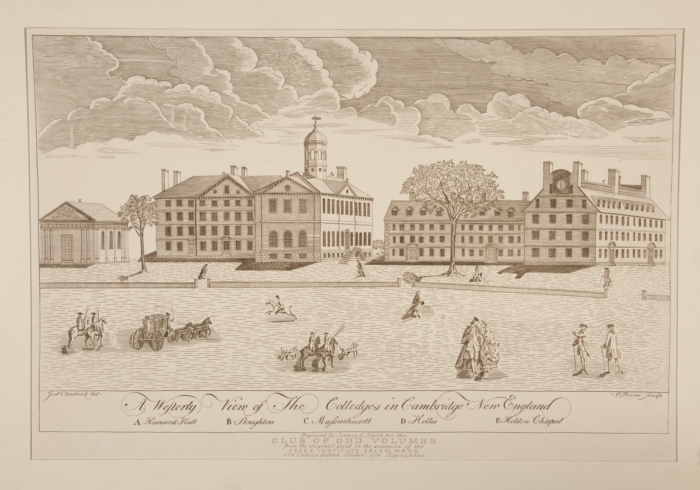
Harvard University (photo source: Wikipedia)
Over at Onfaith, I wrote an op-ed on these issues, lauding the silent hero in this whole ordeal—evangelical universities—and encouraged secular and public universities to consider a more welcoming posture toward religious groups on their campuses. And, I’d argue our government should spend less of its time forcing Christian colleges to violate their religious consciences. An epidemic plagues our most prestigious universities and I hope our leaders would explore every potential solution. If you haven’t followed the news, it ain’t pretty.
It reads like a horror film script: 24 violent sexual attacks in 12 months. Teen boys forced to swim in fecal matter and to eat omelets stuffed with vomit. Powerbrokers turning a blind eye. Sadly, these atrocities aren’t acted out on a silver screen. This is today’s normal at Dartmouth and many of our country’s most esteemed universities… Sexual violence is not a Dartmouth problem. This is an American university problem. (Full essay)
These stories are not to be read on empty stomachs. In short, there is perhaps no more dangerous place for a American female teenager than on campus at some of our country’s most-esteemed universities. The surge in sexual abuse, specifically, has been ushered in by the seemingly harmless “hookup culture” trumpeted nearly everywhere students look. Films from Animal House to Old School celebrate debauchery among students. The soundtrack to ethical agnosticism would most-certainly be headlined by Robin Thicke. Cycling through college parties last year was his “Blurred Lines,” the second-most popular song of 2013. Women’s rights and sexual assault advocacy groups have labeled Thicke’s hit single “rapey,” but, hey, it’s got a great beat! The real story—one that showcased the systematic abuse and heartache birthed from a boundary-less sexual culture—probably wouldn’t be fodder for box office or Billboard success.
I know I’m at the risk of reading like the quintessential fuddy-duddy. And, that’s perhaps warranted. But, desperate times call for old-time solutions. I know many of the remarkable leaders at the helm of evangelical universities, such as my alma mater. They lead in truly countercultural ways. And their silent heroism should be outed. With 20-25% of women leaving college with the wounds of violent sexual crimes, I’ll harken my inner prude without apology.
During the Civil War, nearly all of the great American hotels were destroyed. The Bedford Springs Resort stood resolute, however. Its stately porches and grand pillars held firm through all the fires and fights. Last week, when my family checked into The Bedford in Bedford, Pennsylvania, we stepped back into the 18th century. The technology surpassed the resort’s earliest days, of course. But little else had changed. And that made all the difference.
In 1796, it took guts to make the journey to The Bedford. The train line stopped a day’s journey away. Hotel guests traversed the remaining 21 miles by foot or horseback. Over its two-century existence, the resort’s owners expanded the resort to meet the growing demands of its fan base. The initial draw was the eight mineral springs dotting the mountain property. They were said to hold natural healing powers. The springs are still featured prominently today.
Bedford Springs Resort Indoor Pool (Photo: Matthew Hranek)
The springs feed the indoor pool, which was one of the first built in the nation. We were treated to a few days at The Bedford and we savored each moment. During our stay, our 3-year-old, Desmond, reveled in the pool’s waters. He didn’t necessarily appreciate the ornate pearl tiling and sweeping archways, but mineral water splashes like regular water, so he was happy.
Desmond
From 1986 to 1998, the Bedford sat vacant. It deteriorated quickly and its fate hung in limbo.
In 1998, new owners purchased the Bedford and renovated back to its former glory. The architects and engineers practiced extraordinary caution in restoring the hotel tastefully. They studied historic photographs and talked to longtime neighbors and former employees. They retained original carpentry and masonry when possible, and replicated the original construction with new construction when they needed to.
With the resort aging and filling with cobwebs, the new owners could have scrapped The Bedford and built a new hotel from scratch. It would have been less costly and much faster than the tedious work of historic restoration. A flashy new luxury resort would have looked beautiful sprawling across the Pennsylvania woodlands. But the owners knew something was trapped in the old timbers and scratched floorboards.
There was value in the history. In the heritage and grandeur of the original walls, the owners knew there was irreplaceable worth. And after a few days staying there, I can attest. The Bedford is majestic. The stone fireplaces and Colonial crown molding separates this place from its modern counterparts. It might sound melodramatic to say a building took my breath away, but that’s exactly what it did. The Bedford stirred my imagination.
Bedford Springs Resort (Photo: Resort web site)
We can make a logical case for the restoration of a physical institution like The Bedford. Visitors can see it and feel it immediately. For institutions of different varieties, however, the value of the history can be much more difficult to detect and protect. Why should a nonprofit or school or business care about its heritage and history? Why should the founder’s story matter?
“[Organizations] need to remember how important it is not to sell off the vision when times are tough,” reflected Fred Smith, president of The Gathering, a community of Christian philanthropists. “It’s like selling the family heirlooms. You have some money but the loss is enormous.”
Nonprofits, particularly, are prone to lose sight of this. For faith-based organizations, too, we quickly auction away the family heirlooms–such as our faith, values and purpose–as if our faith is cursory to the work we do. As if our values and founding identity are interesting, but not integral. But it’s those old timbers—the original architecture and designs—that make our work unique. If we apologize for our faith and soft-pedal its importance, we will lose the very uniqueness our world so desperately needs.
The Bedford is special not because of its modern amenities, but because of its rich view of history and commitment to staying true to its founding vision.
Two of my friends recently quit their jobs at a nonprofit fighting human trafficking, an organization whose work resembles International Justice Mission’s. They both worked there for a few years. Drawn by the organization’s unabashed Christian mission and commitment to work with the poorest of the poor, they both traded potentially lucrative salaries to work what amounted to minimum-wage jobs for this mission.
They entered the jobs with bold expectations and enlivened spirits. But the organization squashed their expectations and enthusiasm. Quickly.
“The best word I can use to describe the work environment is oppressive,” one of my friends shared. “There was no trust.”
This organization engaged in remarkable poverty fighting work. And, as Christians, my friends resonated with the values of their employer. But what they found on the inside was not compelling. It was depressing.
The organization promised to save the world but trampled their employees in the process. After trying for a few years to make it work, my friends both threw in the towel. Tired of seeing colleagues chewed up and spit out by the toxic corporate culture, they quit. The culture sapped the very vibrancy from its employees who joined the organization because of its mission.
Behind the slick web site, its leaders created a divisive environment. Staff retention rates floundered. In my friends’ short tenures there, they saw nearly a complete turnover of the staff.
Closed-door meetings were common. Hushed tones and secrecy wafted through the headquarters. Executive leaders sent conflicting messages to the staff. Leaders shrouded their remarks about the financial state of the organization. It was normal for staffers to gather secretly in hallways to pray for the organization and the constant state of disarray and distrust simmering in the office.
This organization’s leaders created a culture of suspicion and panic. Their web site, marketing brochures and events were captivating, but their internal reality was far from it. A cultural malaise infected the organization and just might end up collapsing it, despite the profound nature of the anti-poverty work they’re advancing.
Culture predicts behavior. Embedded in the rites and rituals, culture takes a life of its own: It’s just what an organization does. And it’s too important to leave to chance.
“Culture is a balanced blend of human psychology, attitudes, actions, and beliefs that combined create either pleasure or pain, serious momentum or miserable stagnation,” wrote business consultant Shawn Parr. “A strong culture flourishes with a clear set of values and norms that actively guide the way a company operates.”
In many ways, leaders cultivate corporate culture within faith-based organizations just like they cultivate their own spiritual lives. Spiritual disciplines create cadences and structures for our relationship with God to flourish. Likewise, in marriage, everyday rituals protect and sustain our relationship. Date nights, hand-holding, and shared prayer compose the rhythms of healthy marriages.
“Anyone who has mastered a golf swing or a Bach fugue is a ritual animal: one simply doesn’t achieve such excellence otherwise,” shared James K.A. Smith. “In both cases, ritual is marked by embodied repetition. Ritual recruits our will through our body: the cellist’s fingers become habituated by moving through scale after scale; the golfer’s whole body is trained by a million practice swings. Because we are embodied creatures of habit—God created us that way—we are profoundly shaped by ritual.”
Great organizations get culture. It’s been said we are creatures of habit. Organizations are creatures of shared habits. A lack of healthy habits or proliferation of bad habits will create the space for Mission Drift to occur. Cultivating a purposeful and healthy culture, reinforced by good habits, will carry forward your values and propel your mission forward.
—–
This is an excerpt from Mission Drift, available now at your favorite retailers.
Photo by Steve Stanton (http://stevestantonphotography.com/)
There is nothing less glamorous than a warehouse. Warehouses are like the opposite of eye candy (eye spam?). But, if it’s true that “you never miss a good thing till it’s gone,” perhaps we should visit Medora.
Medora is like many small towns throughout our country. It looks a lot like the town where I spent four years in college. This small rustbelt town, located just ninety minutes south of Indianapolis, is low on hope. With under 1,000 residents and the worst high school basketball team in the state of Indiana, Medora is a sad place. It’s storefronts stand empty. It’s houses look dilapidated. Neighboring communities know Medora for its challenges with meth addictions and fatherlessness.
“Medora is in the gutter, some say, with everything going on. People losing their jobs. It’s hard,” said Chaz Cowles, a teenager who has already served a sentence in the juvenile penitentiary.
Filmmakers Andrew Cohn and Davy Rothbart profiled the small town in their new documentary that shares the town’s name. The film focuses on Medora’s winless basketball team, but basketball is just a lens. Through it, we can see the fate of many small towns across the country. Among other woes, unemployment hampers Medora most. But it hasn’t always looked that way.
“When I was a child growing up, your parents either worked at the plastic factory or the brick plant,” shared an older Medora resident. “Now, we have neither one. Now, there’s no employment to amount to anything here in town. None.”
Medora’s high school is on the brink of collapse. The population has steadily decreased as poverty has increased. But the struggles this Indiana community faces are not unique to small towns in America’s Midwest. Why? What caused Medora’s steady decline over the past few decades? On a much larger level, we can see an amplified version of these problems in Detroit’s bankruptcy.
Medora, Indiana (picture from official web site of the documentary, medorafilm.com)
The thrust of coverage about Detroit has focused on the failures of the municipal government. Corruption and failed governance played a role, of course, but have we missed the main culprit? Joseph Sunde and I recently penned an essay on Detroit’s bankruptcy in The City. In the article, our central question was this:
Would we be discussing Detroit’s current governance malaise if Chrysler, Ford, and General Motors—“Detroit’s Big Three”—still kept the city’s workers employed?
The reasons Medora’s plastic factory and Detroit’s auto plants have moved are complex. Many suggest “Buy USA” schemes to fight off American factories moving to China, India and elsewhere. For reasons I’ll save for a future essay, I disagree with that prescription.
What I’ll say is this: Hug your local factory.
Across our country, millions enter the doors of warehouses like my friends’ metal fabrication facility and home improvement depot in Denver. In many cities, including mine, warehouses continue to thrive. In these places, workers find labor to put their hand to, wages to feed their families, and a community of coworkers who know them.
In small towns, big cities and everywhere in between, nondescript warehouses keep communities alive. They don’t seem all that significant, but as Medora illustrates, they are. These plants make our cities work. When they’re gone, things collapse. We should reframe their importance, not as necessary evils, but as irreplaceable cornerstones of healthy societies.
(To protect confidentiality, I have changed the names in this story.)
It started like many good things do: By accident.
On a cold night, Donna and several members of her suburban church showed up at a homeless shelter in an oft-overlooked Philadelphia neighborhood. The shelter, housed in a church basement, epitomized what’s best about urban churches in this country. The founder, Sally*, did her Good Samaritanism with little fanfare. She relentlessly loved the vulnerable on her block, serving up warm food and insatiable cheer to the men and women who walked through the basement doors. Today, however, her life’s work has been sterilized.
Donna and her friends’ volunteerism started so right. When they discovered the basement shelter, they fell in love with both the cause and the leader.
“Sally was a wonderful Christian woman,” Donna said to me as she reminisced. “After five months of serving there, Sally shared with me that we needed to start something for the children.”
And they did. Sally’s vision collided with Donna’s heart. Donna and her husband became the ringleaders. Together with Sally, they soon raised enough money purchase equipment and hire a preschool teacher. The church volunteers rounded out the staff. In just a few months, they launched a thriving urban preschool to complement the shelter. They showed up consistently, without pay, to serve some of Philadelphia’s most vulnerable children. They served meals, taught Bible stories, sang Christian songs and prayed with the kids. New York Times columnist Nicholas Kristof once noted that “the further he travels from the capital city” in countries he visits around the world, “the greater the likelihood the aid workers he meets will be from a religious organization.” The same holds true in the back-alleys and forgotten neighborhoods in our cities. The Onion satirically posted the headline, “Local Church Full Of Brainwashed Idiots Feeds Town’s Poor Every Week.” We might be a little crazy, but at our best, Christians are crazy in ways that surprise our culture. Sally, Donna and their churches showed up where others would not. Compelled by their faith, they served in the selfless way of Jesus.
The influx of children and well-heeled volunteers into Sally’s shelter brought attention to the program. And it soon began growing quickly. Publicity, donations, and needy families flooded the shelter’s doors. Sally’s nonprofit soon experienced what parents call growing pains. Increased exposure meant increased public scrutiny.
“The kitchen needed to meet regulations, understandably,” said Donna. “We needed to have certified food handlers delivering meals. That, essentially, ended the church serving meals. Slowly, our role as a church became more vague.”
As the shelter grew, Sally and Donna’s mission began to fade. The board brought on wealthy benefactors who had deep pockets but a very different vision for the shelter. Month by month, the founding fire dimmed. Bureaucracy supplanted soul. Neutrality replaced conviction. Soon, just a façade of Sally’s mission remained.
“The board brought in a new executive director to replace Sally, the wonderful woman who had run the program for so long,” Donna lamented. “She was a professional social worker, but she didn’t understand the mission.”
Soon, Donna and her church began to feel like they were no longer welcome.
“When we would come from the church, there were no opportunities for us to serve. We set it up overtly Christian. It was there. And it’s no longer there.”
Over the course of just a few years, Sally’s nonprofit experienced Mission Drift. What began as a vibrant partnership between a suburban church and an urban ministry is today a sterile human services agency that scarcely resembles its founding. No Christian staff. No Bible stories. No Sally and no Donna.
“We are no longer involved there,” shared Donna.
Sally and Donna grew their organization from scratch. And today, the agency is highly professional, yet lacks the fervor and tenderness—the Christlikeness—it was founded upon.
I mourn with Sally and Donna. They lost something they cared about deeply. And I mourn for the families and children they used to serve. Because with the new professional management, the neighborhood ultimately loses. Our communities need vibrant faith-based organizations. I believe the shelter’s secularization hurts all of us, even those who do not share Sally and Donna’s beliefs.
There are dire societal consequences for the widespread drift within faith-based nonprofits. In How Children Succeed, bestselling author, Paul Tough, writes about the “hidden power of character.” He posits a compelling case for why America’s nonprofits need to concern themselves less with cognitive skills and more on the softer skills like grit, curiosity, perseverance and self-control. He argues not as a Christian, but as a scholar who has seen what helps at-risk children thrive.
When Sally’s shelter new leaders abandoned Bible lessons on character, ditched their church volunteers and ceased to pray with the students, they stripped the preschool of its most precious asset. What happened at the shelter is what a friend likened to “the selling off of the family heirlooms.” The shelter might have full coffers today, but it’s traded away what mattered most.
Mission Drift is prevalent, but not inevitable. To share the stories of hope, and help the faith-based organizations you love stay true to their founding mission, please consider joining the Mission Drift launch team (the book releases on February 18). Simply email me or leave a comment below to help us spread the word. Below, I’ve posted the newly released video teaser for the book.