Autumn pinches the daylight hours. I felt it a few weeks ago while tilling and seeding our backyard. The sun started sinking like a rock, truncating the time I had to work outside. On that evening, I planted the seeds and watered them in with the very last glimmers of dusk. While I watered, I looked over the yard and reflected on the dozens of hours I had invested in my little corner of the earth over the previous weeks.
During this same time, other corners of the earth fell into chaos. Ebola arrived. ISIS expanded. Russia invaded. Closer to home, Cal State evicted InterVarsity. Meanwhile, I leveled dirt and installed patio pavers. Am I guilty of “fiddling while Rome burns”?
The idiom hails from a legend about Rome’s first century leader, Nero, who played his fiddle while his city burned to the ground, leaving over half of the city homeless. His gleeful indifference to the plight of his people is fact. Whether or not he actually played an instrument while his city was aflame is debated. The point stands: People suffered and Nero didn’t care. His city burned and Nero reveled in his well-protected life of luxury. His cold-heartedness in the tragedy was proven when he built his “Golden Palace” and “pleasure gardens” on the ruins of the fire.
Just a few hundred miles away from Rome, a short flight across the Adriatic Sea, sits the city of Sarajevo. Twenty years ago, conflict thrust this less-known European city into headlines. Sarajevo was the main stage of the Bosnian War for close to five years, from 1992 to 1996. Sniper fire and machine guns ripped through the streets, killing many and ravaging the culture and historic artifacts of the city.
Vedran Smailović saw his city burning around him. Vedran, a professional cellist, mourned as he watched the war wreck his hometown. So he took to the streets. In an act Sara Groves dubbed “a protest of beauty,” Vedran played his cello amid the ruins every day for over two years during the war. He took his cello into bombed-out buildings and destroyed rail yards, lamenting as he moved his bow back-and-forth over his cello.
“I never stopped playing music throughout the siege,” Smailović said. “My weapon was my cello.”
Vedran Smailovic, the Cellist of Sarajevo (Photo credit: Michael Evstafiev/AFP/Getty Images)
The cellist from Sarajevo drew global acclaim for his actions. It was a beautiful protest. People rallied around his story. Due to the outrage and attention Vedran brought to the conflict, he is often credited as being one of the reasons the war ended when it did.
When I mow my lawn or prune my trees; am I Nero or Vedran? I sure can feel like both. When I see pictures of severed heads on stakes in Syria, it certainly makes my shrubbery choices feel trivial. When I read stories of American missionary doctors discarding caution by volunteering to go Liberia, Ebola’s epicenter, it makes reading bedtime stories to my son feel, well, rather humdrum.
In a call to radical living, some Christian activists desacralize the revolutionary work of faithful Christian living. It was God who challenged his exiled people to “build houses …plant gardens …bear sons and daughters …and seek the welfare of the city.” Not exactly a storm-the-gates sort of command, but a provocative challenge in a pagan city like Babylon. Sometimesrevolutionary Christianity looks like medical missionaries fighting Ebola. Sometimes it looks like dads playing joyfully with their kids at the park.
But, if we harden our hearts and close our fists to suffering, the day at the park might not be so different from the fiddle in the flames. Gardening while the world burns becomes only as ignorant as we are. If we garden in blissful negligence of the world—or plant our hedges to protect ourselves from our neighbors—we’re no better than Nero. We are the privileged elite of this world. We lead lives of safety and health, immune from the pain and persecution experienced by so many.
At first glance, fiddling while Rome burns is not so different from playing the cello while Sarajevo does the same. But though their actions look like twin siblings, their tenor looks nothing alike. Vedran mourned with his city. He stood for beauty amid the pain. Our challenge is to play our cellos, mow our lawns, paint our nurseries and file our expense reports with one hand fully engaged in the world around us and the other extended in longing to our God who loves justice and defends the weak.
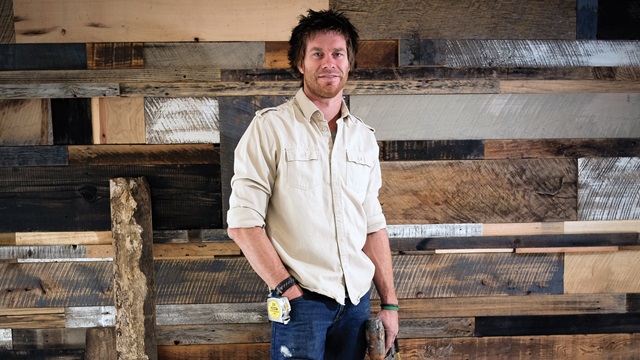
“I’ve always enjoyed building and fixing things,” says Brandon Yates.
After high school, Yates became an electrician. A fast study, he advanced quickly through the first two electrical certifications, apprentice and journeyman. Finally, when he became a master electrician in 1999, Yates founded KC One, an electrical contracting services company based in Kansas City, Missouri.
“Craftsman is a lost word in our day,” says Yates, now 37, who aims to change that by recruiting hardworking high-school graduates with an aptitude for making things. KC One’s apprenticeship program provides on-the-job training and certifications for one or two young electricians each year. “Society teaches these kids that they’ll become losers if they become electricians. My job is to unteach them.”
The perception that the trades offer less status and money, and demand less intelligence, is one likely reason young people have turned away from careers in the trades for several generations. In Yates’s school district, officials recently shuttered the entire shop class program. In our “cultural iconography,” notes scholar Mike Rose, the craftsman is a “muscled arm, sleeve rolled tight against biceps, but no thought bright behind the eye, no image that links hands and brain.” Thinking, it’s assumed, is for the office, not the shop.
Josh Mabe (photo credit: Gary Gnidovic // CT Magazine)
But considering that Scripture identifies Jesus himself as a tektōn (Mark 6:3, literally “craftsman” or “one who works with his hands”), we think it’s high time to challenge the tradesman stereotype, and to rethink the modern divide between white collar and blue collar, office and shop, in light of the Divine Craftsman who will one day make all things new.
—-
These paragraphs opened up an essay I worked on for a few months with my friend, Jeff Haanen. It was an exciting project both because of my ownhistory and because it’s a hugely important issue in our society. Writing this essay also provided the opportunity to celebrate the work of two friends—Brandon Yates and Adrian Groff—and share their stories with the Christianity Today audience.
You can read the full essay here, The Handcrafted Gospel. If you’re hungry for a few more stories along these lines, check out a few of the other articles I’ve written for CT along these lines.
I’m smitten with online reviews. Nearly daily, I use reviews to pick lunch spots in new neighborhoods and to decide between two hike options. I love knowing what people think, even when it hurts. Like the time a reader shared that Mission Drift could be improved if it was shortened to a five-page article. I also have a growing affection for authoring my own reviews.
Some of these reviews are borne out of righteous indignation. For instance, when an overhyped donut shop proved to be just that. Or when a restaurant treated my son like a mosquito at a summer picnic. I didn’t hold back on that one. Lest you think I’m Donnie Downer, I do have one rule for penning online reviews: I pair every negative review with a positive counterpart. Among many other favorites, I’ve publicly lauded our neighborhood pizza joint, one of my favorite books, and a great barbershopI frequented recently. The more reviews I have posted, the more fascinated I’ve grown with the way Yelp helps businesses to listen.
We recently hired a builder to replace the aging cedar fence in our backyard. After soliciting bids from three companies, we chose the contractor that best fit our project. Overall, we were satisfied with their work. There was just one exception, which I noted in my review:
[The contractor] was prompt in communication. They completed the project in their established timeframe. I received three bids for the work and their bid was competitive (and they stayed on budget). Unfortunately, they built the fence 7.5″ from our rear property line, which has caused us to lose 15 square feet of our backyard. For a small Denver property; that 15 square feet is significant! When I asked them why this happened, they acknowledged the crew made a mistake. I understand the fact that we all make mistakes, but they did not fix their mistake, nor did they offer any sort of solution for the mistake. I brought it up with them several times, but they did not do anything to rectify the problem. We’re satisfied with the final product, but disappointed to have lost some of our backyard, hence the 3-star rating.
Three days after I posted my review, the owner of the company wrote me an email:
I just read the review you gave us…I am sorry to leave you dissatisfied. I should have followed up a little more closely; I didn’t realize the fence placement was unacceptable to you. Would it be possible for us to correct this for you? I don’t want to cause any inconvenience but we strive to have our customers 100% satisfied. Let me know what you think and again I am sorry it wasn’t done correctly the first time!
He has scheduled a site visit this week to make the problem right. When he does, of course I’ll happily adjust our review. Good or bad, today we all have access to a virtual megaphone. This power existed before the Internet, of course. But never has it been as easy, nor as visible. This constant flow of feedback is why Jacqueline Novogratz articulates how the marketplace helps businesses to hear their customers.
“The market actually is a good listening device, Novogratz said. “I give you a pair of blue shoes as a gift. You say, “Thank you very much, they’re wonderful.” And then you throw them in the garbage as you leave. I ask you if you want to pay for it, you say, “Yes. No. I’d pay for it if they were brown or pink.” We’re having a conversation. So I see real power in the private sector as a way of listening, as a way of creating efficiencies.”
If grandma writes me a check for my birthday, I’m not going to call her and request she send the gift in cash instead—even if that would be my preference. We are rightfully less prone to provide feedback on gifts we receive. But this becomes a major challenge for nonprofits. It’s really difficult, actually, to hear from our customers, from the people we aim to help. This has weighty consequences. It’s one of the chief reasons that many charitable efforts fail to achieve their desired goals. It’s why one of our founder’s earliest initiatives to help the poor didn’t actually work.
Sometimes we’ve acted like just working in challenging places like Congo and Haiti is good enough. It’s not. Even though it’s difficult to provide loans and savings accounts in these countries, we believe the people we serve are partners, not charity cases. This is why HOPE is investing hundreds of thousands of dollars to better listen to our clients, because we owe it to the people we serve to hear what they think of us. We aren’t always thrilled by what we learn, but even the harshest critiques offer valuable insights. Understanding is the first step toward improving. Nonprofits might lack Yelp reviews, but our customers still have opinions we need to hear.
Employing people with special needs isn’t just the right thing to do. It’s good business. And employers across the country are learning that the benefits of hiring special needs employees far outweigh the inconveniences. A few years ago, I wrote an open letter to the CEO of Costco, publicly acknowledging the company for taking this path and hiring my brother, Matthew.
Matthew’s story is not common enough, unfortunately. The consequences of unemployment for this population, both here and abroad, are severe. Perhaps most damaging is the lack of purpose and worth many of these people feel, something I wrote about a few weeks ago in Christianity Today.
For someone like Matthew, it would be easy to assume that given his limitations, the best way to help him would be to provide for him. But the best gift he’s ever received didn’t come from the hand of traditional charity and it didn’t arrive in a wrapped package. It came through a job offer from a Costco store manager.
The call came close to fifteen years ago. And for thirty-to-forty hours every week since that call, Costco has been Matthew’s second home. That’s almost saying it too lightly. To give you a sense of his commitment, he bought his first home due to its proximity with Costco. Matthew and Costco literally share a backyard.
When a Costco opened up in our hometown of Lancaster, Pennsylvania in 1996; its reputation for treating its employees with dignity preceded it. Today, after several promotions, consistent pay increases and with a supportive team around him, Matthew has found his career.
It’s odd to describe physically demanding labor as a gift, I realize. Matthew worked for years in the Costco parking lot, bearing the wind, rain, cold and snow as he cleared the lot of shopping carts. On top of the weather conditions, Matthew could have easily succumbed to the drudge of monotony by now. In his current role, he assists customers in boxing up their oversized condiment bottles and bulk toiletries. On the surface, this is not exactly the work dreams are made of.
But here’s the magic of it. Matthew brings joy into the lives of his coworkers and customers. He helps the regulars save money and buy quality stuff—even if it is more batteries than they’ll ever be able to use. Matthew’s job has illuminated to me just how central work and purpose are to our lives.
It’s how we are all wired. We were created to create. In a counterintuitive way, a job allows Matthew to experience dignity in a way that charity never could. He’s valued and needed at Costco—as evidenced by the community of people there who love him. And by the supervisors who have been able to count on him for over a decade. Work fills a human need that we all have.
Matthew makes his Cotsco a better place. He brings joy to his customers and experiences rich meaning through his work. Costco fulfills a deeply human need for Matthew, providing a place for him to use the unique skills and abilities God’s entrusted to him. We each need charity to help us land on our feet. But even more, God designed our hands and feet to work, because, in our work, we find meaning and purpose.
Employers across the country are waking to the possibilities of employing special needs individuals and I couldn’t end this essay without pointing you to several of them: Tim Harris, restaurateur extraordinaire | Albuquerque, New Mexico
“I’m so excited to go to work in the morning that I do a dance-off in the parking lot,” shared Harris. “It’s a dance …of magic.” Harris founded Tim’s Place, which serves up breakfast, lunch and hugs. Full story (video below).
“They brighten my day,” Athan said. “They are funny, they are talented, they make you laugh. Who wants to run a restaurant? Nobody. It’s an awful, hard job. But running a restaurant where developmentally disabled people work is the funniest, most chaotic, greatest thing ever.” Jack’s employs over 40 people with special needs in food preparation, primarily. Full story.
Gabbedy, born without fingers, produces beautiful jewelry, in spite of what some would suggest are huge limitations. She sees it differently. “I tend to really look at people with fingers and think: Well, how can you manage with fingers, because they must get in the way? It’s just your own perceptive of how you look at yourself, and for me, I was born like it, so I’ve never known any different. I’m quite normal. I’m not disabled at all.” Full story (and video), as shared by my friend, Joseph Sunde.
Randy Lewis, retired VP at Walgreens | Anderson, SC
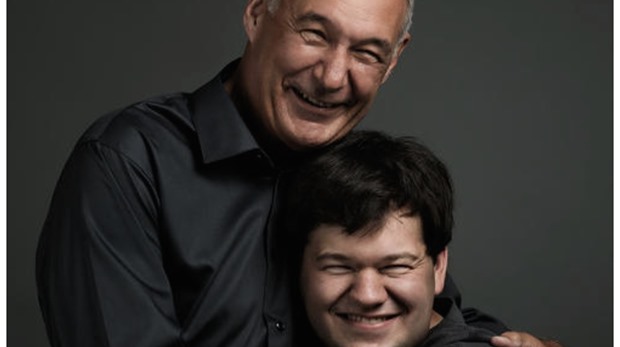
Lewis wrote a book, No Goodness without Greatness, on his son and the efforts he took at Walgreens to employ over 200 people with disabilities. “Watching my son progress taught me that we underestimate the abilities and contribution of people on the margins. Seeing the way Austin is dismissed or ignored by others gave me the courage to stand up for those who are unjustly overlooked and ignored…Employing people with disabilities unleashed a tremendous source of creativity – the kind that can only come from a lifetime of having to learn how to do things differently because you can’t do things like everyone else. Everyone benefited, not just people with disabilities.” Full story (and video) from Amy Julia Becker’s column at Christianity Today. Becker’s blog is a must-follow for those interested in this topic.
Randy Lewis and his son (photo credit: Christianity Today)
“According to the National Institutes of Health, unemployment among individuals with autism is as high as 80%. As a family affected by autism, we’ve watched firsthand how my brother Andrew, and so many others like him, have struggled to find their place in the world even though they have the skills to be exceptional employees. Through over a year of research, we’ve found that the primary barrier to employment has nothing to do with capability, but rather because our society views autism as a disability that requires sympathy instead of a valuable diversity. We’re here to prove that employing people with autism is a competitive advantage.”
“Most adults with autism don’t have jobs. And as more children are diagnosed with the condition, one looming question is how to plan for their futures. A nonprofit in Colorado Springs is helping to answer that question. About half of the staff at Blue Star Recyclers has autism. Workers disassemble electronics equipment so that the parts can be sold to companies in the United States and Europe. The company has found that people with autism have a knack for properly taking items like old computers and televisions apart.” – Colorado Public Radio
“Dirt is non-profit coffee truck, based out of Denver, with a mission to train and employ young adults affected by Autism Spectrum Disorders. Founded in 2013, Dirt Coffee will set out to change perspectives in hopes for a more sustainable future for individuals along the spectrum. We proudly serve locally roasted, organic and fairly traded coffee and espresso.”
“Nearly 80% of people with intellectual and developmental disabilities are unemployed. Bitty & Beau’s Coffee strives to change that statistic by creating a path for them to ecome valued, accepted, and included in every community. THe original shop opened in January 2016 and is run by 40 individuals with intellectual and developmental disabilities.”
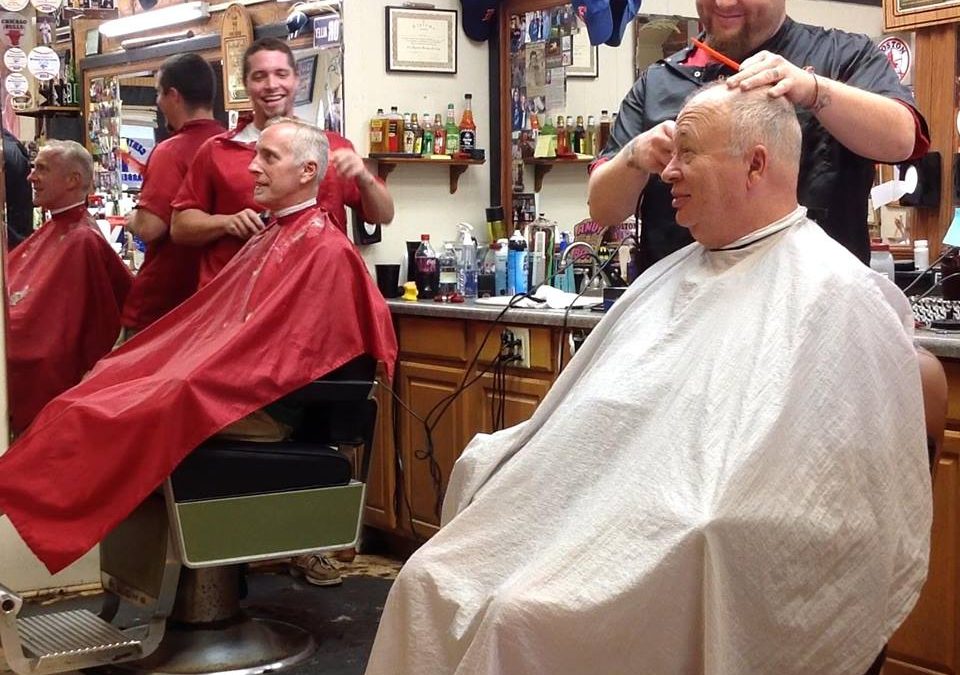
I pushed open the door of Center Court Barbershop and sat down, awaiting my turn. Center Court looked like a proper barbershop should look. Classic swivel chairs lined the mirrors. Longtime patrons, kids and adults alike, chatted about local news. Nobody rushed or hurried, despite the wait.
I stopped at Center Court on my way through Indiana, randomly finding it on my route through Wabash, Indiana. My barber, Jeff, recognized I was a first-time guest. We exchanged pleasantries and he then shared openly about why he had gotten into the business. He tried other careers, he said, but barbering was the first job that felt right.
“I take a lot of pride in what we do here,” Jeff shared. “We believe in the classic barbershop and the craft of it.”
He finished the haircut with an old-fashioned hot shave, carefully maneuvering his straight blade. He finished my cut and as he swept the floor, he handed me a Sharpie so I could sign their customer wall. I found an empty spot at eye-level and wrote “Chris Horst, Denver, CO” alongside hundreds of other signatures.
Center Court Barbershop (photo credit: Company web site)
I walked out of Center Court freshly attuned to why we celebrate small business in this country. Jeff knew his customers by name. He understood their needs and cultivated community while he worked. The barbershop’s core ingredients—its people, rituals, ambiance and craftsmanship—blended together perfectly. But I do wonder what differentiates the small business experience and reputation from that of their larger counterparts.
For over forty years, Gallup has tracked American confidence in our largest cultural institutions, such as the military, our medical system, public schools, and organized religion. The results are fascinating. Ranking second behind only the military, small business enjoys high levels of confidence from the American public. On the flipside, ranking near the bottom since the time Gallup began the study, is “big business.”
American Confidence in Institutions (source: Gallup)
So when do businesses transition from small to big? At what point do enterprises grow from loved to scorned? I’m not asking for a scientific answer. I know there area lot of helpful definitions about what qualifies as small and big business. But survey respondents aren’t given specific parameters. They’re just asked to instinctively react to these labels.
I’ve wondered how this plays internationally as well. When we share the story of a hardworking Rwandan entrepreneur like Jacqueline, who bootstrapped her way from destitution to sustenance, it’s easy to rally around her. Her story is deeply personal and tangible. Though Jacqueline’s current wages are still modest, I will rise early to shout her story from the rooftops.
On the flipside, when I learned my friend’s company recently opened a production warehouse in Vietnam, I shrugged. Though he paid generous wages and provided financial stability to dozens of poor Vietnamese breadwinners, my emotions stood unstirred.
I have some guesses to why this dynamic exists. Small businesses feel more human. Big businesses seem faceless. Startups feel approachable. Corporations seem impenetrable. And then there’s the “headline factor.” If a three-person plumbing company installs a faulty toilet, only a few will ever know about it. If a Fortune 100 company mistreats an employee or, like my beloved Target, has a credit card security breach, it’s front-page news. Everywhere.
In his book, The Coming Jobs War, Jim Clifton, CEO of Gallup, looked at Gallup’s volumes of global research and came to this conclusion: The most significant global issue in our time—more pressing than even environmental degradation or terrorism—is job creation. “If countries fail at creating jobs,” says Clifton, “their societies will fall apart. Countries, and more specifically cities, will experience suffering, instability, chaos, and eventually revolution.”
The Arab Spring has put this on full display, with many experts pinning the revolutions not primarily to religious or political conflicts, but to youth joblessness. To address the deep and stubborn issues of unemployment and poverty around the world, we’ll need enterprise, both big and small. We’ll need the mom-and-pops and the multinationals to put the world’s population to work. We’ll need Jacqueline, the community barbershop, and Target.