
by Chris Horst | Mar 8, 2011 | Blog |
I hated the first commercial break. Just ten minutes into the show, Alli and I were instant evangelists for our new favorite show: America’s Next Great Restaurant. It’s everything good from The Apprentice–entrepreneurship, hard work, and real people chasing their dreams–minus everything really bad about The Apprentice–Donald Trump’s ego, superfluous drama, & The Donald’s hair.
Photo source: Hulu
The concept is simple: “People from every walk of life will vie for the opportunity of a lifetime to see their original restaurant concept spring to life – starting with the opening of a restaurant chain in three locations – Hollywood, Minneapolis and New York City.” It’s a ramped-up business plan competition planted in the fast casual (e.g., Subway, Panera, etc.) food industry.
Be warned, this show induces stomach-rumbling, but aside from that, we see no weaknesses. So much to love, but here are our highlights:
It’s entrepreneurship at its best: Our economy desperately needs fresh ideas, and the data is clear: It’s gonna have to come from new small businesses. This show gives a glimpse into what it takes to translate a fresh idea into a viable concept. The pilot episode was an entire business school crash course. The contestants pitched their concepts and discussed pricing, differentiation, innovation, and leadership with the talented crew of judges. Speaking of which…
These are great judges: No token old British guy. No brainless celebrities. These four judges compose a savvy, experienced and inspired panel. The headliners are Bobby Flay, Food Network phenom/burger artist, and Steve Ells, the founder and CEO of our country’s undisputed top restaurant chain — Chipotle. Bobby is the chops and Steve is the genius–a tandem cowering above the likes of Abdul & Cowell.
The judges are the investors: This is the show’s most unique concept. The judges aren’t just critiquing the contestants and their concepts to conjure-up oohs and ahs. They are determining whose name is on their respective checks as the winning contestant will be funded and coached by the judges themselves. They have skin in the show.
Sure, there are probably better things to do with an hour each week than watch a TV show. You could plant a tree, read a self-help book, or knit a sweater. But, nobody plants trees at night or actually helps themselves after reading self-help books. And, you can knit your heart out while still watching the show.
To boot, this isn’t Skating With The Stars. It’s Hollywood at its best–an educational and inspirational delight. Like The Social Network, I finished watching compelled to create. To innovate my own restaurant concept (..and I do have a great concept). If I were Bobby Flay, I would be high on Joseph Galluzzi and his grandma’s meatball recipe. Maybe I’m going out on a limb (can you really build a restaurant around a meatball?), but watch for yourself and convince me why you wouldn’t invest in Joe. Like the show and the judges; he’s the real deal.
[vodpod id=Video.5721398&w=500&h=413&fv=]

by Chris Horst | Feb 16, 2011 | Blog |
At first glance, the article reads like a first-hand account of a post-disaster country: “Streets once devoid of commerce in towns like this and in Havana are gradually coming to life…” The scene Victoria Burnett described in her New York Times article was not of a country recovering from a natural disaster or civil war. Instead, it depicted her journey through Cuba, a country whose people have been reawakened. She experienced the buzz of vibrant entrepreneurship: Unshuttered storefront windows, machinery re-tuned and whirring along till late in the night, rich smells of freshly-ground coffee beans, and the hum and excitement of restaurateurs promoting their newly-minted menus.
Cuba gives us a real-time snapshot into the spirit of innovation. For decades, unrealized dreams and untapped abilities were locked within the failed Cuban socialist system. The government-imposed chains have now been cut loose. In a move of genuine humility (at best) or desperate self-preservation (at worst), Cuban leaders have admitted that the Cuban people are better positioned than their government to innovate and to address their country’s problems.
The Cuban rebirth unearths the soul of HOPE International’s work. At the core, we believe that God—the innovator of the solar systems, mountain ranges, and human emotion—has planted a glimmer of his creativity in us. When given the opportunity to do so, people will put that gift to work. Architects, chefs, artists, entrepreneurs, electricians, florists, educators and scientists each apply their God-given creativity in uniquely profound ways. Now, for the first time in decades, Cubans have the chance to do the same.
Photo source: Jose Goitia, The New York Times
Our role as those with abundance is to do more than solely provide for those in need. Our calling is far greater than providing food for hungry bellies and medicine for sick bodies. We are surely called to do these things, but also called to unleash the God-given creativity of those in need. To fuel the imaginings of those without the privilege of exercising their creative muscles.
As I watch Cubans taking small steps toward these ends, my spirit is energized. Tomorrow, I will fly to another Caribbean nation – the Dominican Republic. While there, I will observe the fruits of Dominican innovation. I will feast on slow-cooked and fantastically-marinated rice and beans, enjoy the sweetness of freshly-harvested fruit smoothies, and perhaps purchase a bottle of home-brewed shampoo. I will meet entrepreneurs who are using the abilities and engaging the dreams which God has sowed within them. The Dominican economy and its people are flourishing. Let’s hope Cuba is right behind them.

by Chris Horst | Nov 11, 2010 | Blog |
Now, in the red corner: Bill Gates & Warren Buffett, ranked the #2 & #3 wealthiest people in the world
In the blue corner: Carlos Slim (a Mexican business tycoon), #1 on that list
Earth’s three wealthiest people are in an intense philosophical boxing match right now about how to best help the world with their massive fortunes.
Earlier this year, Gates & Buffett created significant buzz when they announced their pledge to give away “the majority of their wealth to philanthropy.” Over 40 other billionaires have joined them. This pledge will result in billions of dollars funneling into charities across the globe. But, not all billionaires agree with their approach.
The most prominent of these billionaires is Carlos Slim, who made provocative comments in response to Gates and Buffet:
The only way to fight poverty is with employment. Trillions of dollars have been given to charity in the last 50 years, and they don’t solve anything. To give 50%, 40%, that does nothing.”
Slim’s comments have served to magnify the criticisms levied by many economists and academics in recent years: Entrepreneurship, not aid, is what truly solves problems and alleviates poverty. The accomplishments of charity, they argue–despite its very noble intentions–pale in comparison to the accomplishments of businesses in creating jobs, raising incomes and improving the lives of poor people around the world. In some cases, they argue, charity has actually done more harm than good in alleviating poverty.
It’s a very interesting debate. As someone who works in the “space between” entrepreneurship and charity, I have enjoyed following the conversation between these heavyweights. More personal opinions to come on this issue, but I’m curious: What are your thoughts?
(Carlos Slim, despite his comments, has given more to charity than just about anyone else in the world. His specific criticisms were toward the billionaire’s pledge to give more than 50% of their wealth to philanthropy.)
by Chris Horst | Aug 4, 2010 | Blog |
It shouldn’t surprise anyone that if you find good people, give them good jobs, and pay them good wages, good things will happen.
– Jim Sinegal, CEO, Costco
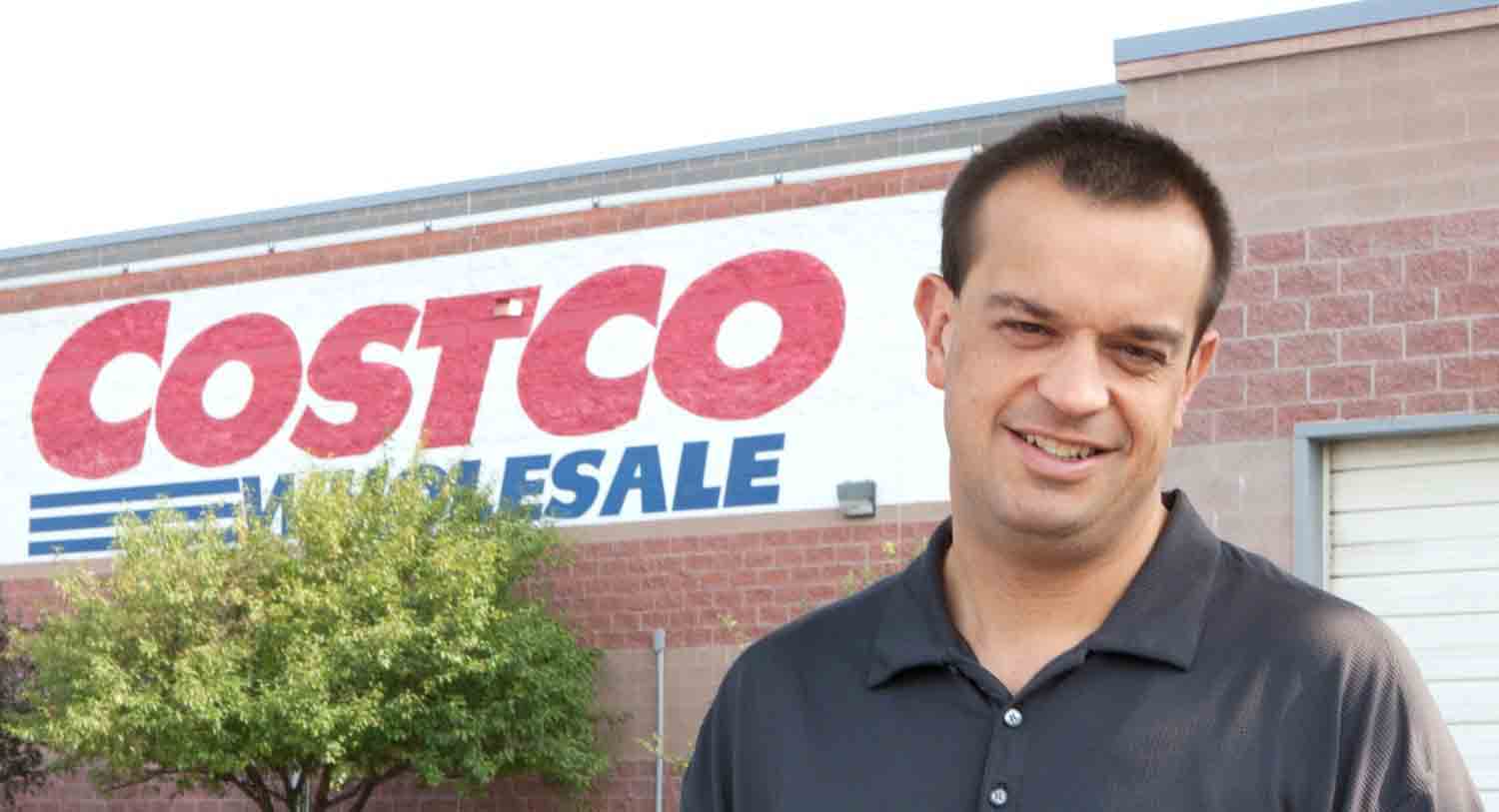
Below is a letter I recently sent to Jim Sinegal and Craig Jelinek (CEO and President, respectively) at Costco Corporation, an international chain of membership warehouses. I am publishing this letter publicly because too often the only businesses we hear about are those which are in some way abusive to customers, vendors and/or employees. As you’ll read in the letter and elsewhere, Costco is an absolute world-class business. If you’re a regular on this blog, you’ll know this is a topic I’m enthusiastic about. Despite the refrain of many headlines, Costco is not the only remarkable business!
—-
Dear Mr. Sinegal and Mr. Jelinek,
Throughout the 90s, my older brother Matthew worked part-time at a grocery store. He was punctual, cared for his customers and he completed his work (clearing grocery carts from the parking lot) with excellence. But, the part-time minimum-wage salary, lack of benefits and toxic work environment prevented this job from becoming a career.
When a Costco opened up in our neighborhood (Lancaster, Pennsylvania) in the late 90s; its reputation for treating its employees with dignity preceded it. Matthew applied immediately in hopes of joining the Costco team. A few short months later, Costco took a chance on him. Today, 11 years later, after several promotions, consistent pay increases and with a supportive team around him, Matthew has found his career. The very generous salary and benefits package allow him to enjoy life in a debt-free home in a great neighborhood, within walking distance of Costco.
For his entire life, Matthew has been classified and known by his “special needs”. Since the day he began at Costco, however, his coworkers and customers have valued him because of his unique strengths. There are many companies which “succeed” at the expense of their workers. I am a firsthand witness to a counterintuitive company: Costco succeeds through the flourishing of its employees.
Matthew worked for years in the Costco parking lot (bearing the wind, rain, cold and snow), taking pride when it was free of carts. And, true to the rumors (that Costco promotes from within), he eventually was given the opportunity to work in the warehouse as a cashier’s assistant, supporting customers as they check-out. He absolutely loves his job…and his customers absolutely love him.
Matthew raves about his friends at the eyeglass center, bakery, pharmacy, food court and customer service desk. He always talks about the tire crew members who allow him to park his bike under their watch–and make sure it is tuned and safe to ride. He pays tribute to his many supervisors, each of whom has taken special care to help him succeed. Matthew enthusiastically participates in Costco’s Children’s Miracle Network partnership month, the annual Christmas party, and he recently won an employee Biggest Loser competition (losing over 65 pounds).
Costco has become much, much more than an employer to Matthew. Thank you for giving him a chance. I have always deeply believed that Matthew does not need any handouts — he just needs opportunities to apply his incredibly unique gifts and abilities. The purpose and care with which you approach business has literally changed the course of my brother’s life and has been an unspeakable blessing to him and to our family.
My warmest thanks,
Chris Horst

by Chris Horst | May 20, 2010 | Blog |
Two months ago I started a journey, in monthly installments, to two fictional cities—Assetsville and Needsville—both cities representative of poor communities in Africa. While the issues, such as poor health care and dirty water, in these cities are identical, the responses to these issues could not be more different—both in philosophy and methodology.
Tomorrow’s leaders are currently studying in schools across our country and around the world. The importance of how we educate our children cannot be overstated. However, well-documented problems exist in the educational systems of even the wealthiest of nations, including our own, as we stare at a future where, for the first time in our history, illiteracy rates will be higher for our children than they are for us. These problems are only exacerbated in places like in Needsville and Assetsville, where infrastructures are broken, governments are corrupt, and safety nets are porous.
Needsville’s leaders are aware of the depth of the educational problems in their community. In some parts of the city, the schools are the issue. Accountability does not exist. Teachers rarely show up, or show up intoxicated, and students receive only a semblance of an education. In other parts of the community, government power-brokers perpetuate the problem. Teachers are poorly equipped and undertrained and some teachers have gone months without pay because the local government has withheld or distorted aid funding. To counteract the steady regression of Needsville’s youth, they have poured enormous amounts of resources and new strategies into resolving the problem. They have filtered huge amounts of foreign aid to government-run schools. Yet, the increase in funding has simply expanded a broken system, rather than driving positive reform, though it is not from a lack of clever ideas.
“Laptops for all!” was lauded as a quick-fix, but the actual citizens of Needsville had no role in the development of the final product, and the program failed due to limited demand and poor design. A few Christian missionaries have set up quality private schools, but the reality is that donor funding limits them to reaching just a fraction of the students in the community, and there are no missionaries in many of the city’s neighborhoods. Sadly, the future is not bright for Needsville’s children. The numbers are clear. Despite all the increase in funding, the schools are failing and 30% of Needsville’s children are still not attending school.
In Assetsville, the future of the city is brighter than its present because of recent reforms. Across the city, parents, frustrated with the quality of their children’s education, decided to take action. Fed up with the quality and bureaucracy of their city’s schools, dozens of aspiring parents became the solution. They started private schools, many held in local church buildings, to provide their children with a higher level of education. Students at their schools consistently outperform their neighbors in Needsville and attendance rates are much higher. The local government even got into the act. Encouraged by the results, government leaders began providing private school vouchers to families and training to these teachers.

These schools are run by “edupreneurs” who charge a small monthly fee to the students, though close to 20% of the students in these schools, predominantly orphans, are exempt from fees. This arrangement adds accountability for the edupreneur, as parents now have a real voice in their children’s education. While providing a much-higher quality education for the poor, the school is also providing jobs for the edupreneurs and teachers, and in many cases, bringing the community back into the church building. Encouraged by the progress, a new organization was launched to support these edupreneurs through teacher training, small loans for facility improvements through microfinance organizations, and through curriculum support. The Christ-centered curriculum is designed with the edupreneurs and emphases entrepreneurialism, with a vision of shepherding and equipping the next generation of Assetsville’s leaders. Next month’s final installment will look at the guiding values and principles of this series.
*Thanks to Professor James Tooley, whose research I drew upon heavily for this article
