
by Chris Horst | Jan 12, 2011 | Blog |
I have never watched ABC’s hit series “Extreme Makeover: Home Edition” without getting goosebumps, at the very least. A recent episode featured an incredible rehabilitation project at a school for deaf youth. My heart strings weren’t tugged. They were yanked. I was enthralled with the stories of the kids, and deeply moved by the incredible transformation which took place.
But, sadly, Extreme Makeover has been has had a very shaky record of success. When the projects ended for many of the recipient families, and the celebrities were replaced with utilities bills, their homes became a suffocating hardship. Six of the families have actually gone into foreclosure. For these six families, the Extreme Makeover experience made a big splash but became a big burden.The ongoing costs and maintenance required for heating these huge homes and keeping the swimming pools operable were exorbitantly and unaffordably high.
Source: TV Guide
These families struggled with a gift they were not prepared to receive. Tracy Hutson, an interior designer on the show, responded to these foreclosures: “I think our hearts were in the right place, but we just got carried away.”
Tracy’s reflections to her failed charity projects mirror feelings we all have experienced after our own misguided compassionate endeavors. Like the producers, donors and celebrities on Extreme Makeover, we often swarm into poor communities with our cameras flashing. We generate a firestorm of enthusiasm, but so often our results fall woefully short of our noble and charitable intentions. Our hearts were right, but our outcomes were wrong.
To their credit, the producers of Extreme Makeover have since adjusted their approach to ensure a higher level of success: They are building smaller homes with more manageable upkeep and they are working with recipient families to ensure they are capable of maintaining their new homes. Likewise, the solution to our failed charitable efforts should not be to abandon Good Samaritanism altogether. Instead, we need to intensely scrutinize our efforts, retool where necessary, and ensure that those on the receiving end of our efforts are partners in the process.
by Chris Horst | Dec 23, 2010 | Blog |
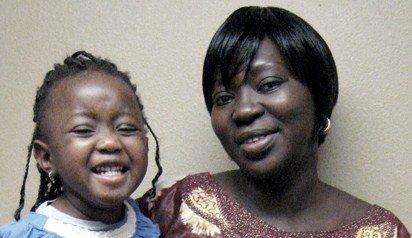
Clarisse is a woman of contagious energy and insatiable determination. Alli and I met her and her two sweet girls–Fanta and Bintu–while living as resident volunteers at Joshua Station, a transitional housing program for at-risk families in Denver. She and her family moved in after a series of life crises left them with no other options.
Clarisse has persevered through many life crises. She grew up in Brazzaville, Congo, a Western African nation which has been hampered by civil war and heated ethnic conflict over the past two decades. Clarisse and her family escaped to the United States as refugees several years ago after the ongoing unrest became a serious threat to their lives.
During a recent dinner with Clarisse’s family, she somewhat sheepishly asked Alli and I a simple question: Can you explain the word sour?
It was harder to define than we imagined. It is no easy task explaining this concept to someone who did not grow up snacking on Sour Patch Kids and WarHeads. We resorted to explaining sour by enacting the facial contortions the taste almost always demands. Clarisse graciously acknowledged her understanding, though her expression revealed that it humbled her to even ask.

That simple question sunk home a much more complex realization: Living in an unfamiliar place — with radically different cultural rules and a foreign language — is a challenge I will never fully understand. To be driven from my home under the threat of death is not something I have experienced. This is not a situation unfamiliar to Jesus and his family, however:
When the magi had departed, an angel from the Lord appeared to Joseph in a dream and said, “Get up. Take the child and his mother and escape to Egypt. Stay there until I tell you, for Herod will soon search for the child in order to kill him.” Joseph got up and, during the night, took the child and his mother to Egypt. He stayed there until Herod died. This fulfilled what the Lord had spoken through the prophet: I have called my son out of Egypt.
Matthew 2:13-15 (CEB)
I rarely think of Jesus the refugee. Candidly, it disconcerts me to think about the King of Kings living as a foreigner. New Testament scholar, Craig Keener, describes Egypt as a destination of “last resort” for Judeans. The lowliness of the stable birth simply set the stage for Jesus’ life of humility. He was born in poverty and raised a refugee. My God is the designer of culture and the creator of language. Yet remarkably, he relinquished this supreme position, likely forced to humbly ask his Egyptian neighbors the definition of sour.
This post is part of the Advent Blog Tour, which is bringing the familiar Christmas story to you through the lens of a new Bible translation, the Common English Bible, and 25 different voices.


by Chris Horst | Dec 15, 2010 | Blog |
It is more blessed to give than to receive.
How many times will you hear these wise words this holiday season? This is my favorite time of year primarily because of this season’s emphasis on giving. The charitable and gift-giving yearnings among us all are stoked and encouraged more in December than at any other time of the year. This spirit is encapsulated and affirmed in what might be our favorite Christmas saying: It is more blessed to give than to receive.
The axiom could not be truer. Giving is a joy. Research suggests that generous people are happier people. Generous countries are happier countries. Benevolence brings vibrancy to our faith. Historically, openhandedness and abundant giving have been the fragrance of the Church. Part of our mandate as Christians includes a call to a countercultural understanding of our role as stewards, rather than owners, of our time and treasure. I’ll just speak for myself, but my hunch is others will resonate: My charity often robs the poor of the opportunity to give, rather than encouraging generosity.
We hold a collective agreement that giving is more blessed than receiving. Accordingly, we need to invest more energy and intentionality around promoting generosity among the people to whom we give. When the poor become more than recipients, actually becoming donors and volunteers themselves, the very soul of generosity is unleashed.
Pay it forward-ism should be our rally cry. Stories from places Romania and Uganda compel me to give in this way:
Inspired by the generosity of donors to their country, a group of Romanians determined to replicate this generosity themselves. This month, 50 microfinance clients of HOPE’s partner program in Romania participated in funding and packaging over 12,000 Christmas shoeboxes for orphans in their community.
In Uganda, one man—Bishop Hannington—has catalyzed an entire community around this concept. Even though the town was recovering from a war, and poor in every way imaginable, he preached a surprising and seemingly impossible message of generosity. Even the very poorest in this community responded to his call to live generously. One woman, both elderly and crippled, put an exclamation point on Bishop Hannington’s message (4:57 in the video):
I heard what was taking place. And even though I am crippled, I, too, wanted to give.
What God did there through His church is nothing short of a miracle. The story will be an encouragement to you as we enter fully into the season of giving.

by Chris Horst | Nov 19, 2010 | Blog |
Close to five years ago, I charged into employment with HOPE International, riding the surge of the microfinance movement. At that time, the only press you could find on microfinance lauded the concept. The idea of helping poor people borrow and save money was not just pitched as a good idea. It was the world’s best idea.
Because the concept was so potent, so preeminently powerful, some industry leaders claimed it would single-handedly put poverty in a museum. Every major news source in the country (NYT, The Economist, Newsweek, CNN, etc.) featured a steady stream of microfinance stories, all with the same message: We have discovered poverty’s cure-all—our silver bullet. There was literary and conversational “dancing in the streets” as we celebrated the discovery of the one-stop solution which would solve our world’s problems. The clear verdict: Microfinance eradicates poverty.
During early 2007, however, the news soured. The dancing turned to questioning as those bold proclamations were challenged. Research findings painted a less than glamorous picture of the impact of microfinance. Journalists (from these same publications) discovered microfinance clients who had taken out loans from one institution to pay off loans at another. Last month, it was revealed that some lenders’ high-pressure loan delinquency practices actually drove over 50 Indian microfinance clients to commit suicide, sparking agrowing unrest in the Indian microfinance sector. The clear verdict: Microfinance perpetuates poverty.
Here is my question: Why are we so desperate to label microfinance as either a panacea or pandemic? Might the reality be that microfinance is neither? When the Toyota acceleration debacle hit mainstream or NWA Flight 255 crashed, nobody suggested that the automobile, airplane, or transportation system in general were detrimental to our society. Similarly, when Waiting for Superman hit theaters this month, highlighting the sad reality that many of our nation’s public schools are failing our country’s youth, even the biggest of educational critics do not suggest that all schools be shut down.
On the flipside, we share a belief that for every pastor scandal or denominational split, there are many more positive examples of churches truly making a positive impact on our world. The reality is that no single idea, concept, industry or poverty alleviation strategy is perfect or devoid of abuse and corruption. We all know hospitals, airlines, car manufacturers, schools and churches which are successful – and probably a few which have failed.
Microfinance is not a new idea – we all benefit from the core concept every day. Savings accounts, business training, loans, and insurance products are tools we all use every day. I am personally grateful for Graystone Bank and Wells Fargo, both of which have provided an immeasurably positive benefit to my life. I also know countless successful entrepreneurs across the globe whose businesses were fueled by mentoring, biblically-based business training and access to capital.
It is just as wrong to talk about microfinance eradicating poverty as it is to lump payday loan shops, ruthless money lenders and usurious banks with sound, values-driven, client-focused microfinance initiatives. Not all microfinance is created equal! Sadly, a nuanced and balanced perspective does not make headlines, but my encouragement is to critique every extreme story, on both sides, in the court of commonsense and sound judgment.
Please let me know if you have questions about any of the recent articles or news stories on microfinance. I’d love to dialogue with you!

by Chris Horst | Nov 11, 2010 | Blog |
Now, in the red corner: Bill Gates & Warren Buffett, ranked the #2 & #3 wealthiest people in the world
In the blue corner: Carlos Slim (a Mexican business tycoon), #1 on that list
Earth’s three wealthiest people are in an intense philosophical boxing match right now about how to best help the world with their massive fortunes.
Earlier this year, Gates & Buffett created significant buzz when they announced their pledge to give away “the majority of their wealth to philanthropy.” Over 40 other billionaires have joined them. This pledge will result in billions of dollars funneling into charities across the globe. But, not all billionaires agree with their approach.
The most prominent of these billionaires is Carlos Slim, who made provocative comments in response to Gates and Buffet:
The only way to fight poverty is with employment. Trillions of dollars have been given to charity in the last 50 years, and they don’t solve anything. To give 50%, 40%, that does nothing.”
Slim’s comments have served to magnify the criticisms levied by many economists and academics in recent years: Entrepreneurship, not aid, is what truly solves problems and alleviates poverty. The accomplishments of charity, they argue–despite its very noble intentions–pale in comparison to the accomplishments of businesses in creating jobs, raising incomes and improving the lives of poor people around the world. In some cases, they argue, charity has actually done more harm than good in alleviating poverty.
It’s a very interesting debate. As someone who works in the “space between” entrepreneurship and charity, I have enjoyed following the conversation between these heavyweights. More personal opinions to come on this issue, but I’m curious: What are your thoughts?
(Carlos Slim, despite his comments, has given more to charity than just about anyone else in the world. His specific criticisms were toward the billionaire’s pledge to give more than 50% of their wealth to philanthropy.)

by Chris Horst | Oct 27, 2010 | Blog |
We are city folk. I’m not sure how or when it developed, but Alli and I love urban living. While we certainly are activists for the joys of the city, we aren’t exclusivists. We love small mountain communities, rolling farmland and the towns outside the city — the suburbs. For us, however, the city is home. And here’s why:
Density: Cities are packed with people. Houses are slammed against each other and apartments are stacked up high. Streets swarm with all stripes of humanity on bicycles, in cars, riding buses and boarding light rail (or, as true urbanists hope: Walking). This people potpourri creates an incredible amount of energy. Weekend days in the city are filled with street festivals, political picketers, farmers markets, sporting events…on top of the normal hustle and bustle.
(photo credit: Lancaster Living)
Culture: We like living in community with folks who look, think and act radically different than we do. It’s not a race issue as much as a variety issue. Our neighbor, Vicky, has lived in our flavorful neighborhood for 45 years. She’s a widowed, African-American great-grandmother who has lived through the civil rights era and has spent a life watching the streets where we now live. There is a Latino entrepreneur who peddles his tamale varieties while peddalling his bicycle through our neighborhood. It’s a joy to be surrounded by people and perspectives from different age brackets, cultures, faith backgrounds, and educational levels.
History: Our cities are like living memoirs, filled with stories, buildings, scars, and relics of our country’s past. We love the aging homes, ornate old church buildings, and the stories of our city’s yesteryear. The richness of these stories is woven through the tree-lined streets and historic neighborhoods–and the people who walk them.
Need: In 1900, 9% of our world’s population lived in cities. In 2000, that percentage exploded to 50%. Where there are lots of people; there are lots of challenges. Cities, and uniquely so in our country, are poor. We are drawn to live in tough neighborhoods because we feel called to do so.
City living is the hip thing to do these days. But, for the above reasons, I don’t think that we are living here (solely) because its cool. I just think it happens to be that many people share some of these same appreciations. But, either way, we love it.
