“At BiG, we call our community members citizens,” shared Jennie Thollander, director of program expansion at Brookwood in Georgetown (“BiG”), a community for men and women with special needs outside of Austin, Texas.
Amy, Citizen at BiG, photo courtesy of BiG
Citizens. While sharing the BiG story at a Praxis pitch event last week, Jennie referred to the community members as artisans and bakers. This language communicates BiG’s values. They don’t define the people they serve by what they lack, but by how they contribute and participate in BiG’s mission. On the BiG campus each day, citizens make pottery, garden, design cards, and experience the love of Jesus. They are not recipients nor beneficiaries, but collaborators.
Nobody better preached and practiced this than Jesus. In Luke 14, we see one of many examples of this. Jesus is a dinner guest at the home of one of the Jewish religious leaders.
As these religious leaders jockey for the best seats in the room based on who has the most seniority and rank, Jesus calls it out: For everyone who exalts himself will be humbled, and he who humbles himself will be exalted.
He then illustrates what he means. Jesus tells a story about a man who plans a great party for his powerful neighbors. But his high-society guests produce all sorts of excuses for why they cannot make it—from recent land and livestock purchases to a new marriage. All told, none of the heavy hitters at the top of his invite list could make it.
So the man decides to throw out his list and start over.
“‘Go out quickly to the streets and lanes of the city, and bring in the poor and crippled and blind and lame,’” the man tells his servant. “And the servant said, ‘Sir, what you commanded has been done, and still there is room.’ And the master said to the servant, ‘Go out to the highways and hedges and compel people to come in, that my house may be filled.”
This, Jesus says, is how he throws parties. The religious leaders in the room would have understood just how provocative this story was. Inviting someone to your home for a party is a sign of honor and esteem for your guests.
The poor, crippled, blind, and lame represented the least powerful and most overlooked people at that time. Again and again in Jesus’ ministry, these were the people Jesus did not overlook and those who he said in his eyes were the most powerful. But he doesn’t stop there. Because even after the man includes these four groups in his party invitation, there’s still room. So the invitations extend to those living along the “highways and hedges.”
Theologians agree “highways” and “hedges” communicate this man is inviting two additional groups: those on the hedges are people living as squatters and vagabonds—so poor they do not even have a place to lay their heads—and those on the highways are those from outside the land entirely. These were the people the religious elite truly despised: The Gentiles, the Samaritans, the Romans. Yes, even these people are invited to the party.
Now, when I stop scolding the religious leaders sitting with Jesus that night, I imagine sitting in that very room. I wonder what categories Jesus might have used if it was me jockeying for the seat of honor and privilege in that room. In our society, who would I overlook?
Here’s the beautiful truth communicated in this story: Jesus’ party is an upside-down affair. He sees those our world ignores. He esteems those we’re prone to dismiss. And this is what is on full display at BiG.
“Part of our mission is to not only provide a beautiful, excellent vocational opportunity for adults with special needs,” BiG founder, Erin Kiltz said in an interview with Community Impact. “But to actually change the way the world views our population group.”
Changing the way the world views people with special needs to the way Jesus sees them. Like BiG, Jesus sees and dignifies them as people with unique gifts for a world that desperately needs them.
While our tea bags steeped, my friend lamented a dilemma. He had accidentally purchased jeans with a leather label. As an ardent vegan, he described how disappointed he was in himself. For the non-vegans around the table, though, a different dilemma emerged: Clothing labels were now a justice issue.
At dinner tables, on Facebook feeds, and in campaign soundbites, it feels like little ground remains morally neutral. Whether I’m buying jeans, shopping at Target, or brewing coffee, even my seemingly inconsequential actions can communicate—albeit unintentionally—a collage of values and political beliefs.
“These days, just buying a tomato at a grocery store means you are unwittingly supporting toxic pesticides, exploiting labor, and contributing to global warming. Humans think they are making one choice, but they’re actually making dozens of choices they don’t even know they’re making.”
Knowing and caring fully about every issue and cause is simply not possible. And more than that, it’s not wise. The dueling responses amid this whirl of issues are apathy and cynicism: Choosing not to care or choosing to disdain caring. But as Christians called to love our neighbors, we cannot take either of these paths. So how can we navigate the moral complexity of our cause-saturated world? Here are three considerations:
1) Challenge your presumptions: A few years ago, we showed up to the checkout cashier at a grocery store in Boulder, Colorado without reusable grocery bags. Though we had dozens at home, none made it into our car. I’ve rarely felt such strong disdain. We were not just disappointing her, it seemed, but willfully killing baby dolphins. While we still use tote bags regularly, but in a surprising twist, recent research from the British and Danish governments has shown that “you would have to use an organic cotton bag 20,000 times more than a plastic grocery bag to make using it better for the environment.” Is limiting unnecessary waste a good thing? Absolutely. Are reusable grocery bags an environmental silver bullet? No. Hold to our convictions, yes. But we should leave room for the possibility that the cause that feels irrefutably clear true today may end up being murkier than we think.
2) Go deep, not wide: Jared Mackey is a friend and pastor in Denver. Recently, he published an essay at Christianity Today about why pastors should prioritize place. Jared’s writing and work is an example of choosing depth over breadth—choosing one issue or several to focus our energy and care. Jared hasn’t written essays on every topic nor delivered talks on every cause. But if there’s something to learn about the parish approach to ministry, he’s likely learned it. By caring deeply for this topic, his depth of becomes a source of insight for us all. We cannot know everything about everything. But, like Jared, we can choose to learn most things about one or a few things and invest deeply over the long-term.
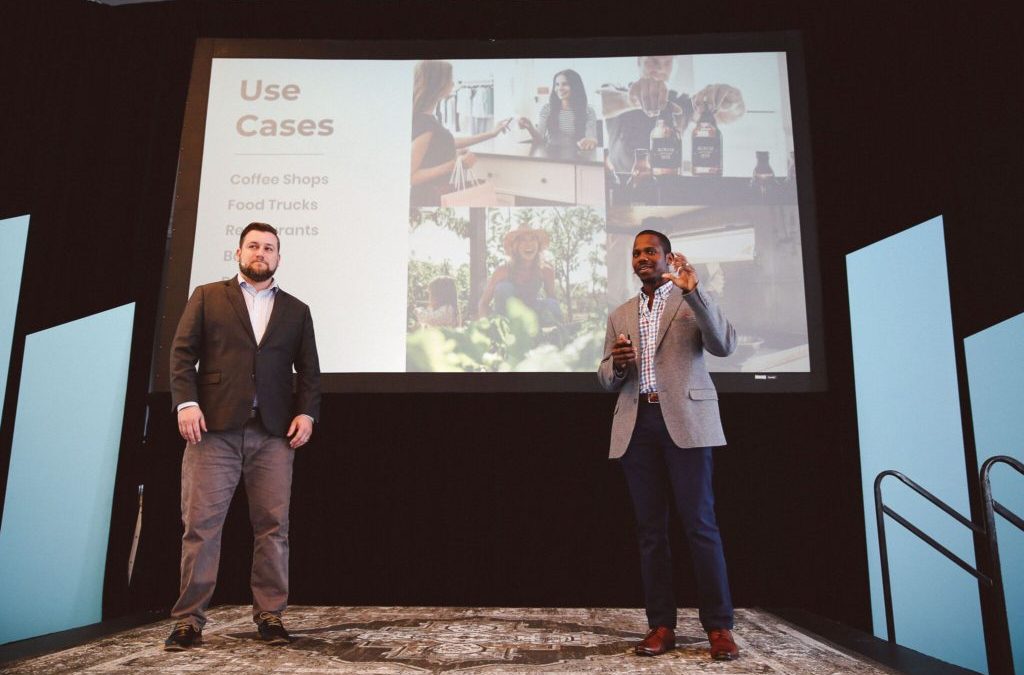
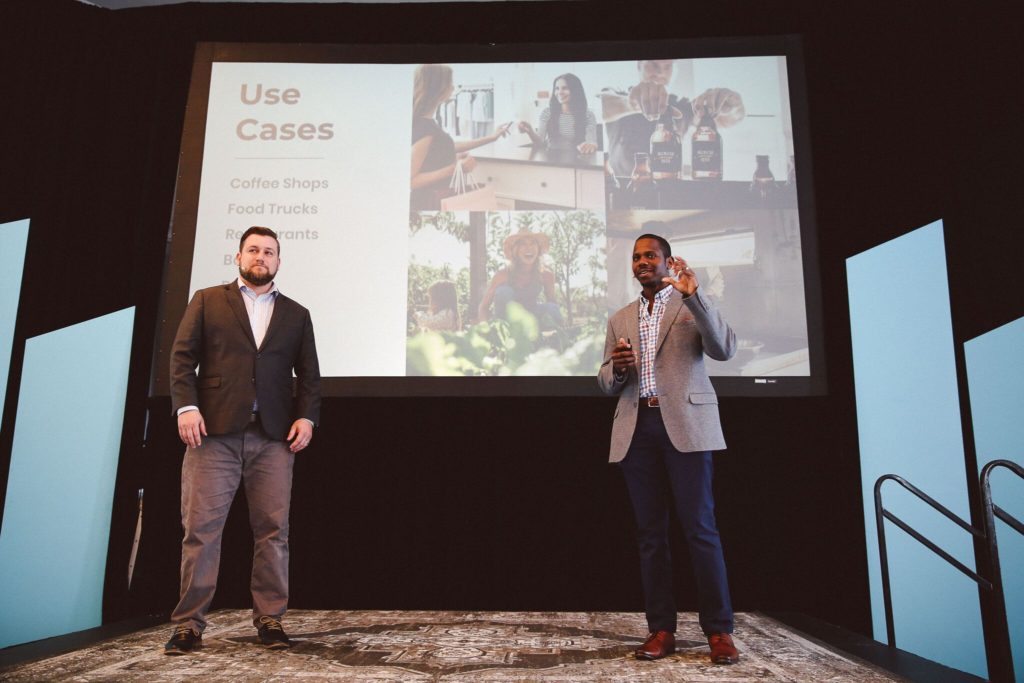
3) Share without scolding: When Bernard Worthy and Justin Straight made the case for their new business, Loanwell, it opened my eyes. Americans, I learned, pay really high-interest rates on personal loans. And, Loanwell allows borrowers to pay less than one-third of the average rate. Bernard and Justin did not browbeat the audience about their cause. Instead, with grace and passion, they communicated why they care. They didn’t lecture, reprimand, or chide us for not caring enough about the lack of access to capital nor market their solution as the best and brightest. When they finished their presentation, my understanding and compassion grew, a mark of great moral leadership in our cause-saturated world.
Justin Straight and Bernard Worthy | Loanwell (photo courtesy of Praxis)
Share your cause with others! And, when you do, do it winsomely and with a spirit of invitation, without angst or blame.
Now, if everyone just does these three simple things perfectly, we’ll solve all the problems that haunt us. Oh, and always buy leather-free denim.
Since publishing Rooting for Rivals last year, three leaders weighed in with their perspective on the same concepts. There’s no evidence these leaders have actually read the book. But, they each offer a unique vantage point on the topic and make a compelling case for open-handed, generous leadership.
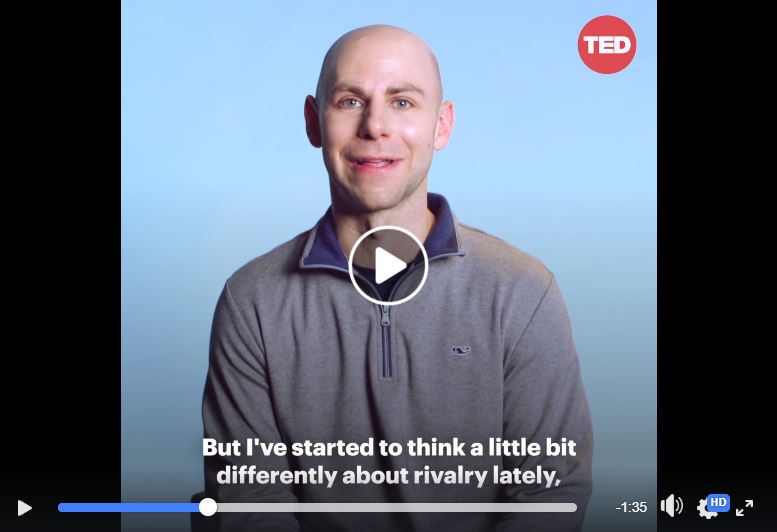
Adam Grant, professor at Wharton and author of Give and Take, made the case for befriending your rivals in the New York Times | March 14, 2019:
“The Norwegian Alpine skiing team takes it even further. At the Olympics, the skiers who race first share a course report by radio with their teammates, giving them tips on how to handle the slopes and turns. This kind of collaboration isn’t supposed to happen in skiing or running. They’re individual sports: success is zero-sum. If I want to win, I should do everything in my power to make sure they lose. But these elite athletes understand something that’s true in every walk of life: Friendly competition can expand the overall “win” pie and enhance your performance.”
Seth Godin, a marketing guru and bestselling author, challenged his readers to get “next to the competition” on his blog | April 2, 2019:
“Books sell better in bookstores than they sell in butcher shops. In a bookstore, surrounded by all the competition, a book is in the right place to be seen, compared and ultimately purchased and read… It’s tempting indeed to shy away from organizing a panel, a conference or a trade show where you can see and be seen right next to those that seek to solve problems for those that are listening. But now that information flows more freely than ever, that’s your fear talking, not an actual strategy for somehow fooling people into believing they don’t have a choice.”
After George H.W. Bush died on November 30, 2018, a letter he handwrote to Bill Clinton made the rounds. The letter was an “artifact of political humility” and an example worth emulating | December 1, 2018:
“Dear Bill,
When I walked into this office just now I felt the same sense of wonder and respect that I felt four years ago. I know you will feel that, too. I wish you great happiness here. I never felt the loneliness some Presidents have described. There will be very tough times, made even more difficult by criticism you may not think is fair. I’m not a very good one to give advice; but just don’t let the critics discourage you or push you off course. You will be our President when you read this note. I wish you well. I wish your family well. Your success now is our country’s success. I am rooting hard for you.
There is perhaps no place the spirit of competition runs more rampant than on college campuses. From college sports’ rivalries to favored fraternities or sororities to the alumni swag we proudly wear—we feel deeply about our schools. This spirit of competition affects even Christian college ministries: Organizations span the confines of evangelicalism: InterVarsity, Cru, Navigators, CCO, Veritas Forum, RUF, and YoungLife are a few of the most prominent, among many more.
Invite leaders of any of these organizations to talk about their organizations and it won’t take long till they start contrasting their models and strategies. In a not-very-subtle manner, they will describe all the ways they employ a smarter approach than their rival organizations. There are helpful and constructive aspects to competition. Healthy relationships with peers can challenge us toward greater effectiveness. And, it is appropriate for us to articulate our unique organizational distinctiveness.
But to what end? Is our mission as followers of Jesus to grow our organizations or to grow God’s Kingdom? And what exactly are we afraid of? Do we believe God’s resources are limited? That there’s only so much to go around?
Over the last few years, several of the largest campus ministry organizations sensed God inviting them toward a more collaborative posture. These leaders believe their shared mission of sharing the love of Christ on all our country’s college campuses supersedes all their individual agendas.
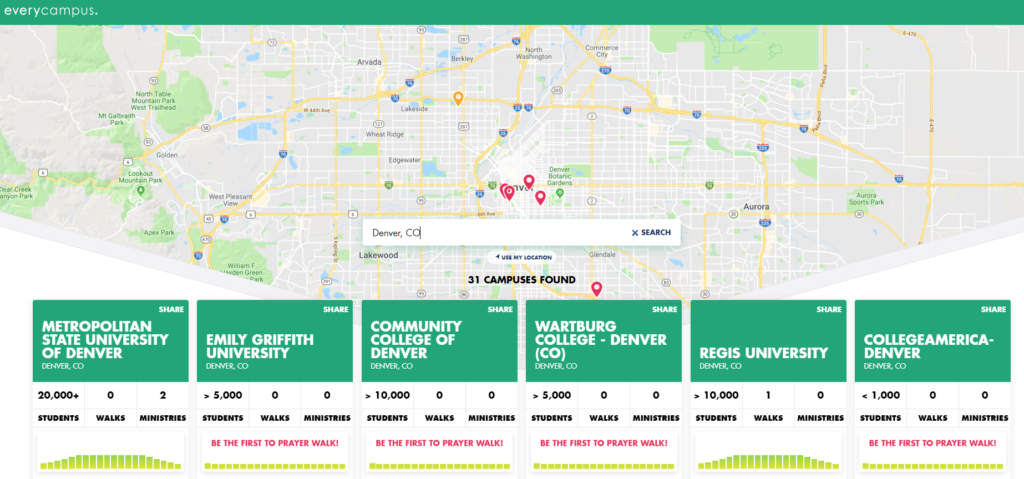
Led by InterVarsity and Cru–and joined by 30 other collegiate ministries–this new venture has been dubbed “Every Campus.”
“The goal is… ‘zero campuses without an expression of a student ministry by 2025,” said Mark Gauthier, executive director for Cru’s US campus ministry. “It’s not about Cru, InterVarsity. It’s not about who gets to take credit for it,’ he added. ‘It’s about reaching the students and professors of this country.’”
On the Every Campus site, they invite everyone passionate about college students in this country to get involved, aggregating the reach of InterVarsity and Cru (for now) and soon populating the data from dozens of other ministries that have joined them. The Every Campus endeavor is in its infancy, focused first on recruiting followers of Jesus to pray for all 5,000 college campuses in this country. But who knows where it might go from here?
Like the new Bible translation collaboration, Every Campus points to a fresh wave of Christian ministries pursuing a mission beyond the boundaries of any one organization. This is good news for these organizations, for their leaders, and for our public witness to our increasingly skeptical neighbors.
“The glory that you have given me I have given to them, that they may be one even as we are one, I in them and you in me, that they may become perfectly one, so that the world may know that you sent me and loved them even as you loved me.” – Jesus | John 17:22-23
Alli and I love being foster parents. Over the last four years, seven precious children have arrived at our doorstep as the result of some unspeakable hardships they’ve faced.
Two years ago, on a freezing cold Sunday morning in January, a phone call woke me up at 3:30 AM. An almost-3-year-old boy, Sammy, needed a safe place to go. An hour later, a caseworker pulled up in front of our home in a Chevy Suburban. Sammy laid on the backseat, asleep, and I carried him into our home. He stayed asleep until after 9:00 AM the next morning.
At the time, the only thing we knew about Sammy was his name and age. He arrived with only the clothes on his back and a blanket and pillow. We did not even know what language he spoke. When he came out to the kitchen that morning, he had no idea who we were. He experienced the heartache of being ripped away from everything he knew and was waking up in a place completely foreign to him. Sammy was hungry, isolated, and scared. I’ve never known that level of fear. I’ve never felt the things that sweet boy felt. As he scanned the kitchen, we did the only thing we thought might help: We pulled out a chair and dished him up some pancakes.
Photo: Sammy
Both here and across the world, Sammy’s experience is mirrored by so many. For people experiencing these levels of desperation and fear, no amount of job training or long-term development strategies will be all that helpful. There are times in all our lives when we simply need a plate of hot pancakes and a warm bed.
I wonder if this desperation is what Israel felt when God freed them from slavery in Egypt. Yes, life in Egypt was terribly hard. But life in the wilderness was terrifying. Like Sammy and many of our neighbors, God’s people in the wilderness felt instability and hunger and they were isolated and scared. As the Jewish people escape generations of captivity in Egypt, they escape their chain not into the Promised Land, but into the barren wilderness.
Even though God performed miracle after miracle, the people of Israel did what humans do: They forgot. They forgot God’s provision and complain that though they are no longer slaves, they will die of thirst. So God provides water for them to drink. Then, hunger sets in.
“Would that we had died by the hand of the LORD in the land of Egypt, when we sat by the meat pots and ate bread to the full, for you have brought us out into this wilderness to kill this whole assembly with hunger.” (Exodus 16:3)
Now, it’s easy to beat Israel up for their tone. From my vantage point, their persistent fearfulness is equal parts maddening and confounding. Hadn’t God just deployed legions of frogs and locusts, turned river water into blood, and turned daytime to night? You don’t think he can keep you fed?
But if we see them compassionately, as God absolutely did, our perspective changes. These freed slaves were desperately afraid. They were isolated and homeless. Like Sammy arriving in our home, Israel faced a scary new world. But God responds in love, “Behold, I am about to rain bread from heaven for you… and in the morning you shall see the glory of the LORD.” (Exodus 16:4,6)
As always, God comes through on his promise. God does something miraculous and rains bread from heaven. “And when the dew had gone up, there was on the face of the wilderness a fine, flake-like thing, fine as frost on the ground.” (Exodus 16:14)
Manna was unexplainable to those who first tasted it—and even more mysterious to read about today. But one thing we do know is this provision of manna was not dependent upon the attitudes or beliefs of the recipients. Manna was a daily reminder of God’s unconditional love. No matter how little they trusted, no matter how far their hearts wandered, no matter what… the manna kept showing up. Every morning, for decades, God demonstrated no-strings-attached generosity.Until recently, though, I never considered why it stopped. I never really thought about what caused God’s daily provision of bread to stay in heaven.
It wasn’t an imprecise day.
“The people of Israel ate the manna forty years,” we read, “till they came to a habitable land. They ate the manna till they came to the border of the land of Canaan.” (Exodus 16:35)
“And the manna ceased the day after they ate of the produce of the land. And there was no longer manna for the people of Israel, but they ate of the fruit of the land of Canaan that year.” (Joshua 5:12)
It wasn’t like there was a weaning period where God provided half manna distributions. It was there each morning until it wasn’t. After providing manna for 14,600 consecutive weeks, the manna dried up. Theologian Jen Wilkin writes, “God provided manna supernaturally until the day they no longer needed it.”
God’s compassion did not stop when the manna dried up, but it did look different than it did before. For a specific time, God did give his people manna. God also gave His people land, and with the land, an invitation to put their hands to work and cultivate it, to provide for what their families needed. This, not the manna, was what God’s people longed for and prayed for—to have a place and a livelihood to call their own. And God invites us to do the same, showing us how we should care for each other.
God’s people in the wilderness and in the Promised Land enjoyed the dignity of participating in God’s good provision. As they harvested manna and later harvested the bounty of their fields, they worked and tasted the gifts of their Creator. And God called them to extend that same provision to their neighbors. In their lives and ours, sometimes that generosity looks like manna–unmerited, no-strings-attached, warm pancakes compassion to those who find themselves in the wilderness and in need of help. At other times, that generosity looks like the gift of the Promised Land–opportunity and investment availed to those ready to provide for themselves and their families.