
by Chris Horst | Nov 23, 2016 | Blog |
I never chucked a straw bale before the summer of 1999. But that summer and the next, I moved thousands into humid, sticky barns throughout southern Pennsylvania.
My friend’s parents owned the farm and they put a few friends and me to work. We started early each morning, crowding into a pickup truck and bouncing along country roads till we arrived at that day’s barn. Once there, our job was simple: Fill the barn with straw.

Simple, but not easy. With temperatures regularly in the 90s and the barns trapping in the dust and heat, we slogged through each day. And when the job was done, we’d ramble back to the farmhouse for heaping plates full of all sorts of cheese and meat-laden casseroles. Teenage boys eat food by the pound. Teenage boys working on farms all day eat food by the shovelful.
The work was not glamorous, but it was deeply satisfying. The demands of the job challenged us. The sense of completion energized us. We loved the fun of working with friends. Our boss taught us about farm life, trained us on new techniques and machinery, and celebrated our labor. And, he paid us well. When I opened my first paycheck, I couldn’t fight a smile from creeping onto my face.
I landed my first good job when I was 15. And have enjoyed good jobs ever since. Farm laborer, amusement park ride operator, butcher’s assistant, masonry mud boy, rec center intern, and then, of course, ten years at HOPE. In each job, I’ve had great coworkers, supportive bosses, fair wages, and enjoyable work.
It’s not lost on me how rare this is. Many people throughout history and across the planet have only known dehumanizing work. The log flume shift at Dutch Wonderland bored me nearly to sleep, but that’s about the extent of the hardship I’ve endured in my career.
John Perkins, a heroic civil rights activist, pastor, and contemporary of Martin Luther King Jr., once said, “Jobs are the world’s best social service program.” Paid or unpaid, meaningful work is integral to what it means to be human. The unemployed, underemployed, and inhumanely employed understand the pain of not having good work.
In his book The Coming Jobs War, Jim Clifton, CEO of Gallup, looked at Gallup’s volumes of global research and came to this conclusion: the most significant global issue in our time—more pressing than even environmental degradation or terrorism—is job creation. “If countries fail at creating jobs,” says Clifton, “their societies will fall apart. Countries, and more specifically cities, will experience suffering, instability, chaos, and eventually revolution.”
Our task is to help as many people as possible experience the dignity of good jobs. And particularly, I believe, the Christian’s task is to help those facing barriers to employment to land good jobs. Entrepreneurs who are doing just that are some of the most inspiring people I know.
But even those of us who are not entrepreneurs can help people facing barriers to good jobs by supporting organizations that do. We can patronize great businesses and give to nonprofits that do as well (just a few of my favorites: Bud’s Warehouse, Mile High WorkShop, Magic City Woodworks, Jobs for Life, Krochet Kids, Rising Tide Capital, Seed Effect, Starfish Project, and HOPE International, among many others). I am so deeply thankful for the good work these employers are doing.
What Perkins, Clifton, and my bosses have understood is this: From the barn to the cubicle, good jobs aren’t incidental to human flourishing. We have been wired to work. This Thanksgiving, let’s celebrate family, bountiful food, and our faith. Let’s also celebrate the good jobs many of us enjoy.

by Chris Horst | Sep 24, 2015 | Blog |
I’m glad I began my career before Twitter really existed.
Deep in the archives of my hard drive, I’ve stumbled across more than one Powerpoint presentation that makes me eyes roll. Recently, I found one I used with a church about the superior effectiveness of HOPE International’s work compared to our peers. One slide included a bar chart illustrating how much it “costs” HOPE and our peers to serve one person per year. Of course, HOPE came out the clear bargain winner in contrast to our peers fighting human trafficking, promoting child sponsorship and developing clean water.
It’s tough to know where to start in critiquing my own approach.
Let’s start with what likely undergirded my decision to make this presentation: I believed it was my job to quantifiably prove HOPE’s superiority. No matter whether that’s possible—more on that in a second—my first fallacy was assuming it was my job to make the point. In our culture, we excuse some forms of peacocking. We expect politicians to flaunt their records. We applaud musicians and athletes who declare their own excellence. But for most of history and in most areas of life, self-declaring our preeminence is off-putting.
And yet, there I stood. In my memory, and I hope I was more nuanced, my remarks went something like, “As you can see in this chart, HOPE is ten times more effective than these wiener organizations.”
There’s nothing wrong with talking about why we love the work we do. There’s nothing wrong with sharing the ways our teammates have innovated, nor about the ways God has provided and the lessons we’ve learned. But there’s everything wrong with telling everyone how awesome we are. Bragging should never get a free pass, even if it’s for a good cause.
I’m not saying nonprofit leaders shouldn’t quantify our impact, assess our work’s effectiveness, and invite the critiques of charity evaluators. I’m just saying we shouldn’t be pompous jerks about it.
Then there’s the claim itself—that Christ-centered microfinance was a better dollar-for-dollar investment than other types of charity. For a while, I thought this tack was novel. I sure wish it were. But nonprofits regularly employ this chest-puffing approach to tell our organizations’ stories. I’ve visited enough nonprofit galas and web sites to know it’s commonplace. Nonprofit leaders play nice when we’re in the same room, but get us in front of a room of philanthropists? Well, we just aren’t afraid to tell them about the many ways our approach trumps our peers.
Doctoral students have written tens of thousands about how to best assess nonprofit effectiveness. I won’t try and summarize that here. But what is obvious is my approach was, at best, apples-to-oranges, and perhaps apples-to-fences. Making comparisons like mine demand far more nuance and far less naïve exuberance.
But even if my claim was true—there’s absolutely no way of ever knowing—is that a ranking HOPE wants to win? If scholar Jeremy Beer is right, charities winning at efficiency are often losing at love. In an effort to prove effectiveness and rank how logical it is to support our cause, are we at risk of losing the heart and soul of why we do what we do? The perfect example of love and service to humanity was one that made no logical sense on the surface. Frankly, a lot of what we see in the life and teaching of Jesus rubs against pure rationality.
If I was to go back and share some advice with my younger self, I would frame my advice this way:
First, people care deeply about the why. We want to know why leaders do what we do. We’re interested in how we go about our work, but only if we first know why it matters. When we skip the why and talk about the how—as I did—it is like we’re providing directions but never sharing the destination.
Second, people rally around collaborators. Americans give away somewhere around three percent of their gross incomes. I’m quite certain the approach I employed would do little to move that needle. Instead, it would simply mean HOPE’s slice of the three percent might grow marginally larger. Leaders who collaborate, though, have a shot at actually increasing that pie. Leaders who link arms with others and celebrate the importance of their peers can cast a vision big enough to draw people more fully into the big problems facing our world and more into opportunities for us to respond to them.
Finally, I’d encourage me to remember the world is not mine to save. Posturing like my organization with our amazing methods had the market cornered on brilliance shined a light on me. In so doing, it did not shine a light on the one who is the creator of all good ideas and the one who understands more fully the concerns of humanity more intimately than I ever will.
When I gave that talk seven years ago, Twitter was thankfully still in its infancy. Nobody tweeted a picture of those embarrassing Powerpoint slides. I’m done trying to elevate HOPE at the expense of other great organizations. It was and is a flawed strategy—and it’s a lot less fun than celebrating our peers for the wonderful work they do.

by Chris Horst | Jan 22, 2015 | Blog |
We are one day into a seven week HOPE trip to Hong Kong. We survived the 24-hour travel day and are thus far surviving the swip-swap of our nights and days. And we’re absolutely tickled with our apartment, a 500 square foot one-bedroom that packs a lot of punch in its diminutive size. The four of us are cozy, not cramped and we are grateful for the generous HOPE donor (from Hong Kong) who provided it for us.
The logical question I’ve heard most over the past month is one I hope to answer here: Why exactly are we in Hong Kong for seven weeks?
We’re here to support Nathan de Lyster, our new executive director, in launching HOPE’s first non-US support office. Over the next two months, we’ll meet with current and potential givers, finalize the legal registration of HOPE Hong Kong, and hopefully build a strong foundation for this entity.
It’s a fun challenge for many reasons. And a compelling opportunity for a host of reasons. We glean energy for this launch from the energy of the city. Hong Kong does not rest. Throngs of the city’s residents churn in and out of the subway system and up and down the expansive skyscrapers.
It’s a city of bright lights amidst remarkable natural beauty. The steel and glass stand in sharp contrast to the lush wooded hills surrounded by blue seas. Hong Kong is the world’s largest port city and a place that typifies the change in the East.
Just fifty years ago, Hong Kong stood on the brink of economic collapse. Today, nearly 10% of Hong Kong’s residents are millionaires and it’s the world’s sixth-best place for entrepreneurship and opportunity. Hong Kong is a city where Christians are actively standing for justice and freedom for all its residents, in the face of those who seek to constrain it. These dynamic economic and spiritual realities reverberate across the Asia Pacific.
South Korea is now second only to the United States in sending missionaries abroad. The Pew Research Center projects that by 2030, China will be home to the largest Christian population in the world. The refrain recounted in The Economist aptly describes the shifting momentum in the world: “The Mediterranean is the ocean of the past, the Atlantic is the ocean of the present and the Pacific is the ocean of the future.”

Hong Kong’s story is mirrored across the Pacific Rim. In Seoul, Singapore and Shanghai, the region has experienced unprecedented economic prosperity and growth of the Church. It’s this combination—the vibrant evangelical Church and the surge in financial prosperity—that has created just the right medium for our first international support office.
Across the United States, HOPE manages regional support offices in cities like Dallas, Minneapolis and Durham. In seventeen countries globally, HOPE and our partners manage program offices. But this month, Hong Kong became our first support office outside the United States. We’re excited about this expansion for many reasons. Here are the top three:
- Pull Not Push
One of our convictions with launching new microfinance programs is this: we’ll only expand into places where we are invited. As the saying goes, it’s difficult to push a string. Likewise, while we’ve had internal interest in planting support offices in places like Canada, England and Australia; we’ve had the doors thrown open for our expansion into Hong Kong. A small group of generous HOPE donors with Hong Kong connections have proactively encouraged and funded our exploratory efforts in this exciting city. The mind of man plans his way, but the Lord directs his steps (Proverbs 16:9). And God has orchestrated all the steps for us to expand into Hong Kong.
- Gateway to the East
Hong Kong provides a door into other places in the East. Already, generous supporters from Singapore, Malaysia and South Korea give financially to HOPE. A hub in Hong Kong allows us to better serve the supporters in these and surrounding countries. For fundraising, recruiting and church partnerships, Hong Kong is the perfect place to fuel our growth.
It’s also a gateway to our programs in the East. HOPE has served in Asian communities for over a decade by investing in the dreams of grassroots entrepreneurs in the Philippines and two other countries (names withheld for security). The donors propelling our expansion into Hong Kong believe, and we concur, that it’s a beautiful vision to imagine donors from Asia supporting HOPE’s Asian workers and clients.
- Bankers for Bankers
Hong Kong is a global banking center. It’s a hub for some of the largest financial institutions in the world, drawing like a magnet some of the most talented bankers and influential banks. There’s a beautiful connection between the prestige and power of Hong Kong’s financial prowess and the life-changing financial services HOPE provides to vulnerable people in slums and rural communities throughout the world. We are missionary bankers and are thrilled to introduce Christ-centered microfinance to Hong Kong’s wealthy Christian business community.
—-
The reasons extend well beyond these three. When HOPE’s board looked at the pros and cons of this endeavor, they gave it their wholehearted endorsement.They felt, like me and HOPE’s donors from Hong Kong, that expanding into this city was a compelling opportunity. It’s a massive risk, of course, but we’re here to give this new venture its best chance of success.

by Chris Horst | Aug 12, 2014 | Blog |
I’m smitten with online reviews. Nearly daily, I use reviews to pick lunch spots in new neighborhoods and to decide between two hike options. I love knowing what people think, even when it hurts. Like the time a reader shared that Mission Drift could be improved if it was shortened to a five-page article. I also have a growing affection for authoring my own reviews.
Some of these reviews are borne out of righteous indignation. For instance, when an overhyped donut shop proved to be just that. Or when a restaurant treated my son like a mosquito at a summer picnic. I didn’t hold back on that one. Lest you think I’m Donnie Downer, I do have one rule for penning online reviews: I pair every negative review with a positive counterpart. Among many other favorites, I’ve publicly lauded our neighborhood pizza joint, one of my favorite books, and a great barbershop I frequented recently. The more reviews I have posted, the more fascinated I’ve grown with the way Yelp helps businesses to listen.
We recently hired a builder to replace the aging cedar fence in our backyard. After soliciting bids from three companies, we chose the contractor that best fit our project. Overall, we were satisfied with their work. There was just one exception, which I noted in my review:
[The contractor] was prompt in communication. They completed the project in their established timeframe. I received three bids for the work and their bid was competitive (and they stayed on budget). Unfortunately, they built the fence 7.5″ from our rear property line, which has caused us to lose 15 square feet of our backyard. For a small Denver property; that 15 square feet is significant! When I asked them why this happened, they acknowledged the crew made a mistake. I understand the fact that we all make mistakes, but they did not fix their mistake, nor did they offer any sort of solution for the mistake. I brought it up with them several times, but they did not do anything to rectify the problem. We’re satisfied with the final product, but disappointed to have lost some of our backyard, hence the 3-star rating.
Three days after I posted my review, the owner of the company wrote me an email:
I just read the review you gave us…I am sorry to leave you dissatisfied. I should have followed up a little more closely; I didn’t realize the fence placement was unacceptable to you. Would it be possible for us to correct this for you? I don’t want to cause any inconvenience but we strive to have our customers 100% satisfied. Let me know what you think and again I am sorry it wasn’t done correctly the first time!
He has scheduled a site visit this week to make the problem right. When he does, of course I’ll happily adjust our review. Good or bad, today we all have access to a virtual megaphone. This power existed before the Internet, of course. But never has it been as easy, nor as visible. This constant flow of feedback is why Jacqueline Novogratz articulates how the marketplace helps businesses to hear their customers.
“The market actually is a good listening device, Novogratz said. “I give you a pair of blue shoes as a gift. You say, “Thank you very much, they’re wonderful.” And then you throw them in the garbage as you leave. I ask you if you want to pay for it, you say, “Yes. No. I’d pay for it if they were brown or pink.” We’re having a conversation. So I see real power in the private sector as a way of listening, as a way of creating efficiencies.”
If grandma writes me a check for my birthday, I’m not going to call her and request she send the gift in cash instead—even if that would be my preference. We are rightfully less prone to provide feedback on gifts we receive. But this becomes a major challenge for nonprofits. It’s really difficult, actually, to hear from our customers, from the people we aim to help. This has weighty consequences. It’s one of the chief reasons that many charitable efforts fail to achieve their desired goals. It’s why one of our founder’s earliest initiatives to help the poor didn’t actually work.
Sometimes we’ve acted like just working in challenging places like Congo and Haiti is good enough. It’s not. Even though it’s difficult to provide loans and savings accounts in these countries, we believe the people we serve are partners, not charity cases. This is why HOPE is investing hundreds of thousands of dollars to better listen to our clients, because we owe it to the people we serve to hear what they think of us. We aren’t always thrilled by what we learn, but even the harshest critiques offer valuable insights. Understanding is the first step toward improving. Nonprofits might lack Yelp reviews, but our customers still have opinions we need to hear.
by Chris Horst | Jun 12, 2014 | Blog |
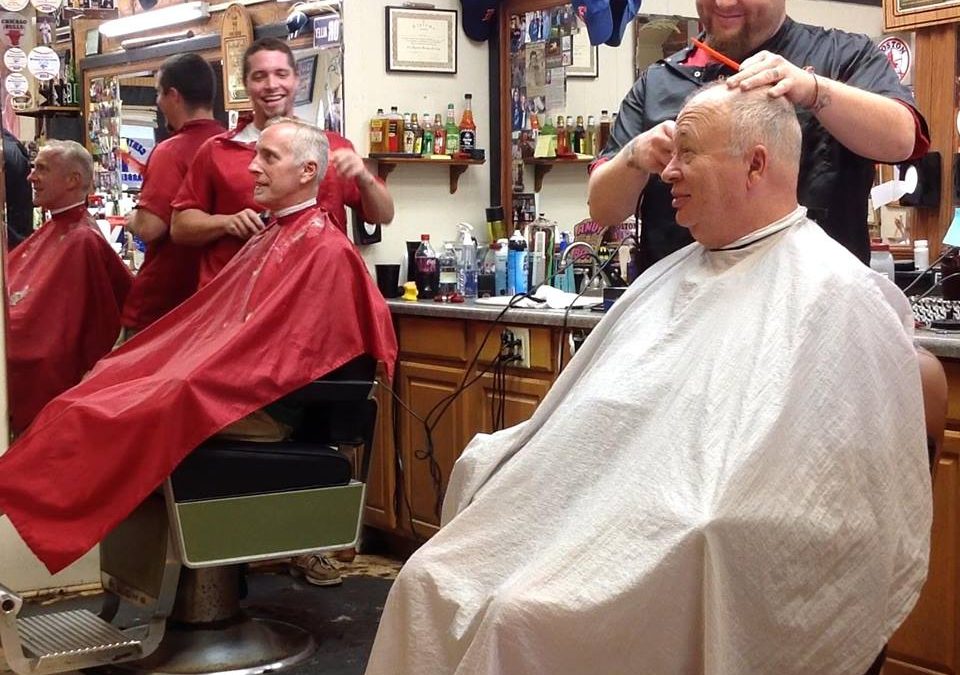
I pushed open the door of Center Court Barbershop and sat down, awaiting my turn. Center Court looked like a proper barbershop should look. Classic swivel chairs lined the mirrors. Longtime patrons, kids and adults alike, chatted about local news. Nobody rushed or hurried, despite the wait.
I stopped at Center Court on my way through Indiana, randomly finding it on my route through Wabash, Indiana. My barber, Jeff, recognized I was a first-time guest. We exchanged pleasantries and he then shared openly about why he had gotten into the business. He tried other careers, he said, but barbering was the first job that felt right.
“I take a lot of pride in what we do here,” Jeff shared. “We believe in the classic barbershop and the craft of it.”
He finished the haircut with an old-fashioned hot shave, carefully maneuvering his straight blade. He finished my cut and as he swept the floor, he handed me a Sharpie so I could sign their customer wall. I found an empty spot at eye-level and wrote “Chris Horst, Denver, CO” alongside hundreds of other signatures.

Center Court Barbershop (photo credit: Company web site)
I walked out of Center Court freshly attuned to why we celebrate small business in this country. Jeff knew his customers by name. He understood their needs and cultivated community while he worked. The barbershop’s core ingredients—its people, rituals, ambiance and craftsmanship—blended together perfectly. But I do wonder what differentiates the small business experience and reputation from that of their larger counterparts.
For over forty years, Gallup has tracked American confidence in our largest cultural institutions, such as the military, our medical system, public schools, and organized religion. The results are fascinating. Ranking second behind only the military, small business enjoys high levels of confidence from the American public. On the flipside, ranking near the bottom since the time Gallup began the study, is “big business.”

American Confidence in Institutions (source: Gallup)
So when do businesses transition from small to big? At what point do enterprises grow from loved to scorned? I’m not asking for a scientific answer. I know there are a lot of helpful definitions about what qualifies as small and big business. But survey respondents aren’t given specific parameters. They’re just asked to instinctively react to these labels.
I’ve wondered how this plays internationally as well. When we share the story of a hardworking Rwandan entrepreneur like Jacqueline, who bootstrapped her way from destitution to sustenance, it’s easy to rally around her. Her story is deeply personal and tangible. Though Jacqueline’s current wages are still modest, I will rise early to shout her story from the rooftops.
On the flipside, when I learned my friend’s company recently opened a production warehouse in Vietnam, I shrugged. Though he paid generous wages and provided financial stability to dozens of poor Vietnamese breadwinners, my emotions stood unstirred.
I have some guesses to why this dynamic exists. Small businesses feel more human. Big businesses seem faceless. Startups feel approachable. Corporations seem impenetrable. And then there’s the “headline factor.” If a three-person plumbing company installs a faulty toilet, only a few will ever know about it. If a Fortune 100 company mistreats an employee or, like my beloved Target, has a credit card security breach, it’s front-page news. Everywhere.
In his book, The Coming Jobs War, Jim Clifton, CEO of Gallup, looked at Gallup’s volumes of global research and came to this conclusion: The most significant global issue in our time—more pressing than even environmental degradation or terrorism—is job creation. “If countries fail at creating jobs,” says Clifton, “their societies will fall apart. Countries, and more specifically cities, will experience suffering, instability, chaos, and eventually revolution.”
The Arab Spring has put this on full display, with many experts pinning the revolutions not primarily to religious or political conflicts, but to youth joblessness. To address the deep and stubborn issues of unemployment and poverty around the world, we’ll need enterprise, both big and small. We’ll need the mom-and-pops and the multinationals to put the world’s population to work. We’ll need Jacqueline, the community barbershop, and Target.
