
by Chris Horst | Mar 24, 2016 | Blog |
“There are some eels that shoot fire and some that shoot slime.”
My son, Desmond, and his cousin, Kellen, meandered along Glacier Creek, firing their stick guns into the chilly waters at their imaginary foes. The two five-year-olds forged their friendship with outlandish stories and whispered potty talk as we wandered the edge of Rocky Mountain National Park just a few months ago.
We hiked at a snail’s pace, which was exactly what these little boys needed.
“My gun needs to charge its battery with nuclear power in this puddle.”
I am not wired for meandering. I’m a Type A pureblood, almost always choosing the fastest route between here and there. But having kids is taking off my edge. It’s unmaking my efficiency.
As a Colorado dad, hiking is a regular activity in our family routines. We love to find new parks and new trails to explore together. But hiking isn’t what it used to be. We break no records and never “make good time.” It’s not for a lack of trying, however. For too long, I would stress over hurrying my kids along. I would prod them to drop the sticks, return to the path, and get on with our adventure.
But I was missing the adventure my kids were trying to have.
“This secret note on the rock says there are one hundred and billion dragons ahead. We have to be careful.”
I could have written down dozens of these priceless one-liners between Kellen and Desmond. Their conversations were wild and hilarious, full of verbosity and adventure. But how many conversations like this have I missed? In my rush to get through hikes–or baths or walks or commutes–have I missed an opportunity to battle dragons, harness nuclear power, and encounter slime-wielding eels?
Being a dad demands we recalibrate our pace. Being a dad rearranges our priorities and upends our self-centeredness.
Dutch theologian, Herman Bavinck once wrote that children “develop within their parents an entire cluster of virtues …children place restraints upon ambition [and] as with living mirrors they show their parents their own virtues and faults.”
Fatherhood is not just a character-growing endeavor, however. It’s also an opportunity to reflect the very character of God. Perhaps the most beautiful phrase in all of Scripture is one God the Father twice bellowed about Jesus: “This is my beloved Son, with whom I am well pleased.”
In these 11 words, we glimpse the heart of fatherhood. One of the many reasons I love working for HOPE is that I get to see this lived out in the men we serve around the world. For many of these fathers, they’ve been long defined by what they are unable to do, not by all they’re capable of doing. Nothing beats stories like these, of fathers embracing their God-given roles in their families.
And, it is this heart that spurred the launch of dadcraft, a web site I launched with a few fellow fathers. We believe fatherhood is too significant to wing it. This is our small contribution to help men refine the art of fatherhood—their dadcraft.
Fatherhood invites us to slow down and nurture the adventurous spirit within our children. It invites us to experience God’s heart in new ways. And, it invites us to uncover our true selves—good and bad—as we do.
by Chris Horst | Feb 25, 2016 | Blog |
Election season is here, and you’ve probably already heard loads of grumbling about candidates and our political process.
The primaries are only just starting. But like an echo following the American presidential candidates on the trail, our collective eye-rolling and ear-plugging has become as reliable as the campaign ads themselves.
The despair is not without merit.
Donald Trump leads the GOP race, despite having made his fortune (though he hasn’t even done that) by profiteering off the vulnerable and elderly through his casinos and strip clubs. And, Hillary Clinton demands “religious beliefs and structural biases have to be changed” in order to accommodate her beliefs—all while potentially facing a criminal indictment. No wonder citizens are donning sackcloth and ashes.
Amid the lament, however, thoughtful citizens have opportunities to celebrate what is good about this presidential campaign. This can be taken too far, of course. But we can assume a healthy posture between venerating and vilifying this election season for three reasons.
Election Season Propels the Economy
We will spend more money on the 2016 presidential election than we spend on school construction for at-risk children.
I fabricated the statement, but it reflects the kind we constantly hear during election season. We think elections are too expensive, too highly influenced by a few mega-donors, and far less worthy than other places we could invest our money. But an underreported reality of election spending is the churn it has on our economy.
Dollars invested in elections don’t evaporate. They are investments in democracy. When we hear about candidates raising hundreds of millions of dollars, our shock comes largely from what we believe is “lost money.” What if we had spent that on education, green energy, or . . . [insert your favorite cause]?
Election coffers aren’t a black hole, though. Ask restaurateurs and hoteliers in Iowa and New Hampshire how they feel about election season. Or bumper sticker and button makers. Or junior staffers and canvassers working with campaigns. Or television stations selling airtime or newspapers selling subscriptions and clicks. Elections are big business. They employ thousands of people directly, fuel the businesses of thousands more indirectly, and create serious economic value, no matter our affection for politics.
Deploying the billions in funds raised for elections are people like my Iowan friends who own a promotional product company that makes many of the shirts, signs, stickers, and other swag adorning our bodies, lawns, and cars during election season. Elections matter to my friends and to their 47 employees.
Election Season Reminds Us of the Beauty of Democracy
In places like Afghanistan, Syria, Iran, Russia, North Korea, Cuba, and Zimbabwe, voters have little to no voice in determining the future of their countries. In many instances, dissent is not only forbidden, but squelched. The global political landscape is often unrelentingly bleak.
For instance, a political catastrophe is currently taking shape in the small capital city of Bujumbura, Burundi. Burundi’s president, Pierre Nkurunziza, obtained a great deal of power over his 10 years in office. Facing a term limit, Nkurunziza refused to give it up, running for a third term in defiance of Burundi’s constitution. Late last year, Burundians witnessed a failed coup, suffered under a surge in violence, and over 100,000 people fled from their country.
Burundi’s story is wrenching, but tragically common. My colleagues at HOPE International are praying for the best and preparing for the worst.
The freedom to vote should not be taken for granted. It is a gift enjoyed only by a small percentage of our planet’s residents—past and present. In a country like the United States, our founders quite literally entrusted the power to the people. We can complain about our system’s effectiveness—about powerful people wielding too much influence or about the unhealthy marriage between faith and politics. But despite its flaws, our system stands in contrast to countries where all the power is controlled by a handful of self-appointed tyrants.
And it’s not all bad news. Often because of the work of Christian missionaries, many developing countries feature thriving democracies. Nations like Botswana, Ghana, Chile, Uruguay, and thePhilippines have proven the merits of democratic rule, even with its shortcomings.
Election Season Generates Meaningful Discussions
Many of us have been instructed to avoid discussing politics and religion in order to remain polite and amicable. Broadly speaking, this is terrible counsel. To be sure, we should avoid becoming petty, coercive, and disingenuous while talking about religion and politics. But to heal our deepest divides, we need more honest conversation, not less, about what matters most.
The issues unfolding on the political stage affect us all. The big ideas we’ll see in campaign ads and on debate stages have consequences. They will impact our wallets, communities, and families. The more that sane people discuss and disagree well, the better off we all will be.
Let’s not succumb to cynicism this election season. Lambasting the democratic process often does little more than make us grumpier. It makes our republic feel less human. So let’s not confine ourselves to the sidelines or the heckling section this political season. Rather, let us embrace the season with a more positive outlook. It won’t be easy. But that doesn’t mean our democracy is not worthy of our best efforts. In a way only she can, Marilynne Robinson wrote artfully about the heart of what election season is all about:
Democracy, in its essence and genius, is imaginative love for and identification with a community with which, much of the time and in many ways, one may be in profound disagreement.
While many of us will disagree profoundly this election season, let’s do so in a loving, Christlike manner, resisting the urge to unleash our inner cynic whenever a friend or family member mentions the campaign strategy or policy proposal of a candidate we find unfavorable.
This article originally appeared in Christianity Today.
by Chris Horst | Feb 25, 2016 | Blog |
Election season is here, and you’ve probably already heard loads of grumbling about candidates and our political process.
The primaries are only just starting. But like an echo following the American presidential candidates on the trail, our collective eye-rolling and ear-plugging has become as reliable as the campaign ads themselves.
The despair is not without merit.
Donald Trump leads the GOP race, despite having made his fortune (though he hasn’t even done that) by profiteering off the vulnerable and elderly through his casinos and strip clubs. And, Hillary Clinton demands “religious beliefs and structural biases have to be changed” in order to accommodate her beliefs—all while potentially facing a criminal indictment. No wonder citizens are donning sackcloth and ashes.
Amid the lament, however, thoughtful citizens have opportunities to celebrate what is good about this presidential campaign. This can be taken too far, of course. But we can assume a healthy posture between venerating and vilifying this election season for three reasons.
Election Season Propels the Economy
We will spend more money on the 2016 presidential election than we spend on school construction for at-risk children.
I fabricated the statement, but it reflects the kind we constantly hear during election season. We think elections are too expensive, too highly influenced by a few mega-donors, and far less worthy than other places we could invest our money. But an underreported reality of election spending is the churn it has on our economy.
Dollars invested in elections don’t evaporate. They are investments in democracy. When we hear about candidates raising hundreds of millions of dollars, our shock comes largely from what we believe is “lost money.” What if we had spent that on education, green energy, or . . . [insert your favorite cause]?
Election coffers aren’t a black hole, though. Ask restaurateurs and hoteliers in Iowa and New Hampshire how they feel about election season. Or bumper sticker and button makers. Or junior staffers and canvassers working with campaigns. Or television stations selling airtime or newspapers selling subscriptions and clicks. Elections are big business. They employ thousands of people directly, fuel the businesses of thousands more indirectly, and create serious economic value, no matter our affection for politics.
Deploying the billions in funds raised for elections are people like my Iowan friends who own a promotional product company that makes many of the shirts, signs, stickers, and other swag adorning our bodies, lawns, and cars during election season. Elections matter to my friends and to their 47 employees.
Election Season Reminds Us of the Beauty of Democracy
In places like Afghanistan, Syria, Iran, Russia, North Korea, Cuba, and Zimbabwe, voters have little to no voice in determining the future of their countries. In many instances, dissent is not only forbidden, but squelched. The global political landscape is often unrelentingly bleak.
For instance, a political catastrophe is currently taking shape in the small capital city of Bujumbura, Burundi. Burundi’s president, Pierre Nkurunziza, obtained a great deal of power over his 10 years in office. Facing a term limit, Nkurunziza refused to give it up, running for a third term in defiance of Burundi’s constitution. Late last year, Burundians witnessed a failed coup, suffered under a surge in violence, and over 100,000 people fled from their country.
Burundi’s story is wrenching, but tragically common. My colleagues at HOPE International are praying for the best and preparing for the worst.
The freedom to vote should not be taken for granted. It is a gift enjoyed only by a small percentage of our planet’s residents—past and present. In a country like the United States, our founders quite literally entrusted the power to the people. We can complain about our system’s effectiveness—about powerful people wielding too much influence or about the unhealthy marriage between faith and politics. But despite its flaws, our system stands in contrast to countries where all the power is controlled by a handful of self-appointed tyrants.
And it’s not all bad news. Often because of the work of Christian missionaries, many developing countries feature thriving democracies. Nations like Botswana, Ghana, Chile, Uruguay, and thePhilippines have proven the merits of democratic rule, even with its shortcomings.
Election Season Generates Meaningful Discussions
Many of us have been instructed to avoid discussing politics and religion in order to remain polite and amicable. Broadly speaking, this is terrible counsel. To be sure, we should avoid becoming petty, coercive, and disingenuous while talking about religion and politics. But to heal our deepest divides, we need more honest conversation, not less, about what matters most.
The issues unfolding on the political stage affect us all. The big ideas we’ll see in campaign ads and on debate stages have consequences. They will impact our wallets, communities, and families. The more that sane people discuss and disagree well, the better off we all will be.
Let’s not succumb to cynicism this election season. Lambasting the democratic process often does little more than make us grumpier. It makes our republic feel less human. So let’s not confine ourselves to the sidelines or the heckling section this political season. Rather, let us embrace the season with a more positive outlook. It won’t be easy. But that doesn’t mean our democracy is not worthy of our best efforts. In a way only she can, Marilynne Robinson wrote artfully about the heart of what election season is all about:
Democracy, in its essence and genius, is imaginative love for and identification with a community with which, much of the time and in many ways, one may be in profound disagreement.
While many of us will disagree profoundly this election season, let’s do so in a loving, Christlike manner, resisting the urge to unleash our inner cynic whenever a friend or family member mentions the campaign strategy or policy proposal of a candidate we find unfavorable.
This article originally appeared in Christianity Today.
by Chris Horst | Jan 28, 2016 | Blog |
Millenials flock to Denver faster than almost every other city in the country. Colorado’s recreational culture, active lifestyle and surging downtown create a magnetic atmosphere for young people. But our new neighbors include more than hipsters in search of tech startups and fresh powder.
“Colorado is better than other places,” said Ah Hki, who moved to Colorado two years ago from a refugee camp in Thailand. “I found a great job and have a lot of work. Housing is expensive here, but the wages are higher here too. And, the weather is better.”
Each year, several thousand refugees make Colorado their home. When they do, a make-or-break factor in their acclimation is whether or not they can find good work. One Denver pallet company is aiming to smooth that transition for refugees into the Mile High City.
Over the past 34 years, 50,207 refugees have made Colorado their home. Nationwide, up to 70,000 refugees—people escaping their home countries for fear of persecution because of their religion, race or some other cause—arrive each year, and several thousand become Coloradans.
They hail from dozens of countries. Since 1980, the largest numbers of refugees journey to Colorado from Vietnam, Russia, Burma and Somalia. When they arrive, government support provides a short window for them to find steady employment.
That’s where James Ruder steps in.
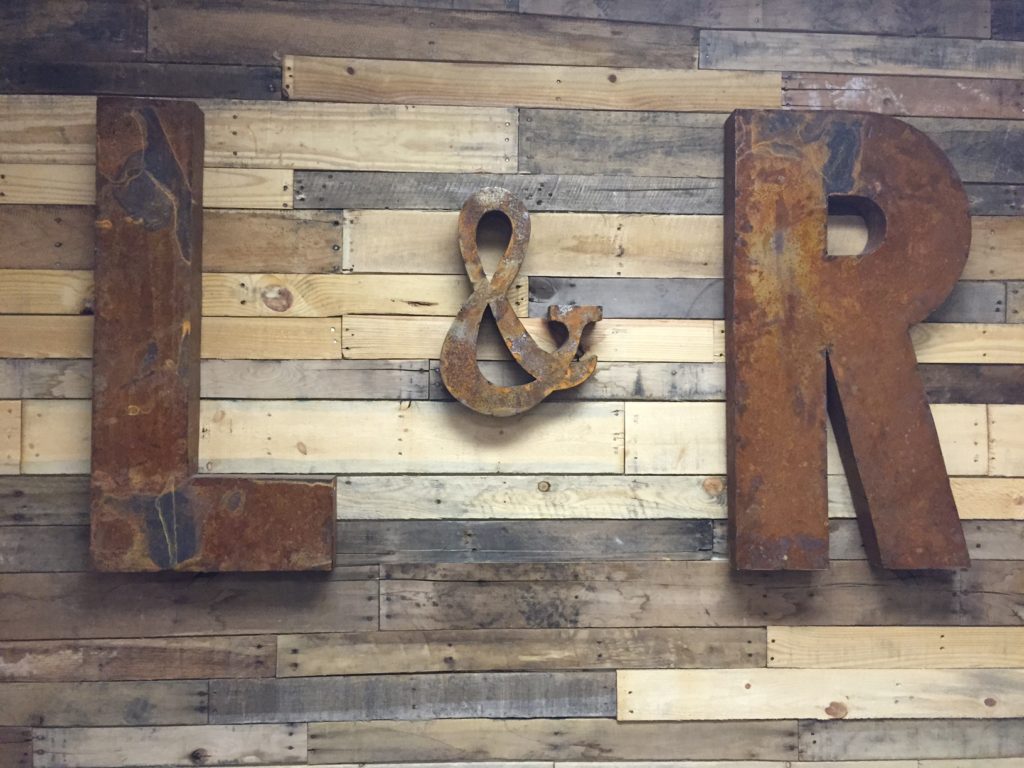
“I want to hire as many refugees as I possibly can,” said James Ruder, owner and CEO of Denver pallet company, L&R Pallet. “It’s been so refreshing to have these guys here. I have the best team of employees I’ve ever had.”
In a sprawling warehouse sandwiched between Stapleton and Aurora, L&R constructs 10,000 pallets each day. Nearly everything Coloradans buy, eat and wear arrives or departs on pallets. Many of these pallets make their way through the L&R shop floor. Some are constructed there from scratch. Many more are rebuilt, repaired or remanufactured by the L&R team.
Ruder’s parents, Larry and Dorris, founded the company in their basement in 1974—long before Pinterest made pallet wood the material du jour. Larry worked at Coca Cola and saw the expanse of pallets the company used each day. So he and Dorris took out a $500 loan to buy a truck. They began buying and selling pallets. Today the company employs over 100 people.
Several years ago, James Ruder began hiring refugees to work in his company. Ruder credits his Christian faith as the motivating reason he began investing in Denver’s refugee population.
“All of us are refugees to this country at some point,” said Ruder. “If these people need refuge and God wants to make my company a place for them, that’s exciting.”
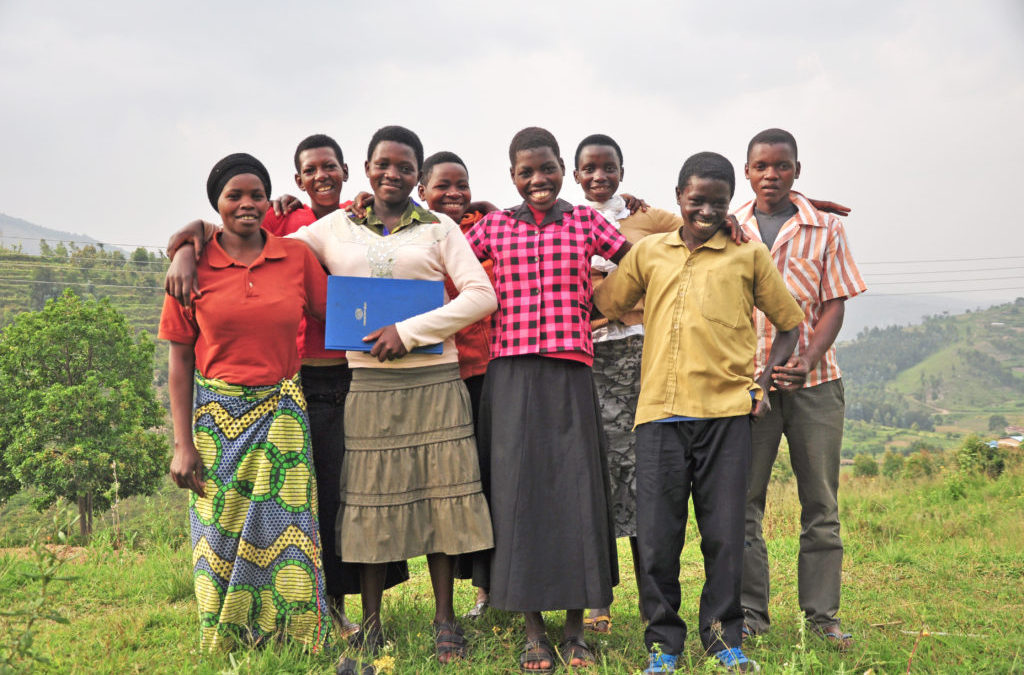
Today, nearly half of Ruder’s workforce are refugees. These craftsmen, builders and forklift drivers hail from places like Congo, Thailand and Burma and they work side-by-side with employees born-and-raised in Colorado. One of these employees, Ah Hki, serves as an assistant supervisor on the shop floor.
“My agency, Lutheran, told me about L&R,” said Hki. “I believe our company is the best. My friends at other companies talk to me about their jobs. But everyone says our company is the best.”
In partnership with Lutheran Family Services and other resettlement agencies, the Colorado Department of Human Services helps to serve the incoming refugee population. Hillary Prag coordinates the training and employment efforts housed in that office.
“The immigration process for refugees—leaving one’s home country to Colorado—strips people of really important parts of their identity,” said Prag. “Having a good job is just as important for refugees as it is for all of us. [We all need] to have the dignity of identifying ourselves with what we do.”
Prag plays an important role in coordinating refugee service agencies, like Lutheran, and training schools like Emily Griffith Technical College. And, she liaises with businesses like L&R to advocate on behalf of Colorado’s refugee population. Refugees often come to Colorado with impressive work experiences; many were doctors, engineers, and lawyers in their countries of origin.
But, navigating the American work landscape can be challenging. Companies willing to be creative in how they hire, onboard and train their employees often find the extra work is entirely worth it.
“[L&R] is very in tuned in to showing their staff that they respect them and that they believe in them,” said Prag. “They believe refugees bring talent that is good for their company.”
Ruder positively describes the experience of hiring dozens of refugees at L&R. It’s not been easy, however. Many of his new employees do not speak English. As a result, they have had to move away from written instruction manuals to more hands-on demonstration. Pallet construction is physically demanding work, often involving powerful machinery.

Many of their training materials now feature illustrations alongside the text. Ruder is also launching English language courses at the request of his staff. He hopes to one day offer citizenship courses and GED classes to further support his employees like Hki and Moo Lu, who currently works in pallet repairs.
Lu and his family moved from Burma to a refugee camp in Thailand when he was 12 years old. They lived at the camp for a decade before immigrating to the United States. He lived in Washington and Iowa for a few years before moving to Colorado one year ago. He is now married and has worked at L&R since moving to Aurora.
“Of course I like working here,” said Lu. “I like it here…I hope to make this company successful and to work with peace.”
Because of the unique challenges facing many refugees, L&R also contracts with a chaplaincy service that avails professional chaplains to all L&R employees. These chaplains speak the many languages of Ruder’s staff members and ensure all his employees have access to personal care, crisis support, and to a confidential, safe person to discuss any challenges they might have. Many of the refugees working at L&R cite the chaplains as a valuable support system in helping them acclimate to life in Colorado.
Ruder believes hiring refugees has been the best decision he’s made. It’s required his company to adapt, but it’s a decision Ruder believes has benefited his company’s bottom line. And, it has improved the corporate culture. His employees have welcomed and celebrated the new members of the team.
Companies that behave badly regularly make the news. It’s easy to write-off business as a problem, not a solution, to the pressing problems in our cities. Meanwhile, we laud nonprofits as having the market cornered on doing good. But L&R stands in sharp contrast to the stereotypes, modeling beautifully how many Colorado companies partner with nonprofit organizations to the benefit of their employees and our communities.
Each day, many new neighbors stream across Colorado’s borders. They come from all over the world. Some come for the mountains. Others come for the lifestyle. But all come seeking refuge. In a nondescript warehouse in northeast Denver, many of these new neighbors have found a place of refuge in a surprising place. They’ve found it at a pallet company.
“L&R is part of a new wave,” said Prag. “This unorthodox workforce could be such a surprising ticket for success for employers in Colorado who want to push the boundaries of what’s possible for their businesses. It takes risk. It takes courage.”
This article originally appeared in The Denver Post.
by Chris Horst | Dec 23, 2015 | Blog |
Last week, a donor, Dan, wrote an exciting note to my boss, Peter. Dan and his wife had already given generously to HOPE this year, but they had an extra $15,000 for end-of-year giving and wondered if HOPE had any unmet needs remaining in 2015. For a fundraiser, emails do not get better than this.
I quickly pulled together a few options and emailed Peter about a few 2016 projects where we could use Dan’s funds. But Peter knew my response wasn’t quite answering Dan’s question. Of course we could use the funds someday—there are a number of great opportunities awaiting next year. But Dan’s question was whether or not we had met our core budget needs for this year.
What Peter and I both knew was something I, as a nonprofit fundraiser, was terrified to admit: Yes, we had met our 2015 fundraising target. In fact, because of the generosity of our supporters, it is likely we will exceed our budgeted 2015 fundraising goal. But I was nervous to admit reality that outside our nonprofit’s walls.
For nonprofits, is there ever such a thing as enough?
—-
In 2006, I began working at HOPE as an administrative assistant. That year, less than 1,000 donors made contributions to HOPE, totaling just under $3.5 million. What’s happened since then has been remarkable. God has provided more than we ever thought possible. This year, it’s likely close to 5,000 generous supporters will give in excess of $17 million to the HOPE mission.
Each year, we prayerfully plan and budget for the forthcoming year. In the past few years, grown into new countries, Malawi and Zambia, as well as new regions within countries where we’re already working. We’ve opened new branch offices, innovated new products, and tightened up existing products. We’ve launched an aggressive impact evaluation initiative. We took larger ownership stakes in microfinance institutions in Rwanda and Burundi. We opened our first international fundraising operation in Hong Kong.

Point is, we aren’t content to plateau. We’ve worked really hard and grown really quickly. But at the end of this year, we’ve met our fundraising targets.
But, every nonprofit impulse within me bristled at the prospect of acknowledging that to Dan. Of opening the door for him to potentially decide to give that $15,000 to another organization. 2016 will be a new year, I thought. Low oil prices could mean some HOPE donors won’t have as much to give. Increased interest rates could stagnate the economy. Our 2016 budget will be higher than our 2015 budget. How will we ever raise next year’s budget?
—-
All these thoughts, though, were dancing around Dan’s question. His question wasn’t whether or not HOPE was a good place to donate his money. He and his wife already believed deeply in our mission. The question was whether we had unmet needs during the last few weeks of 2015. We don’t.
“And [Jesus] told them a parable, saying, “The land of a rich man produced plentifully, and he thought to himself, ‘What shall I do, for I have nowhere to store my crops?’ And he said, ‘I will do this: I will tear down my barns and build larger ones, and there I will store all my grain and my goods. And I will say to my soul, “Soul, you have ample goods laid up for many years; relax, eat, drink, be merry.”’ But God said to him, ‘Fool! This night your soul is required of you, and the things you have prepared, whose will they be?’ So is the one who lays up treasure for himself and is not rich toward God.”
For nonprofits, is there ever such a thing as enough?
To be frank, when Dan’s email arrived, I was thinking about storehouses, not about thankfulness. I was worrying about next year’s harvest, ignoring how plentifully God provided this year. God provided more than enough through the generosity of many of you—who were rich toward God and the work God is doing through HOPE.
In the face of our inner debate, Peter responded with a simple sentence as an act of acknowledging our reality. “We could certainly put additional investment to good use in serving more families… However, I did want you to know that it looks likely we will hit our core fundraising target this year, in case there is another organization with a greater need.”
So as we close out this year, thank you. In this brief post, I want to publicly acknowledge that we have enough. That this year God has provided, through you, beyond our needs.
