
The first few times, I felt almost sneaky about it.
As we arrived to an unknown neighbor’s home, I walked up to the porch, grabbed the bagged item, and stuck four dollars underneath the doormat. Back in the car, Alli and I examined our score. This time, we bought a pair of very lightly worn tennis shoes for our oldest son, Desmond. The next time out, we bought ski passes.
In our neighborhood, we call the informal front porch marketplace The Swap. On the Swap, facilitated by a simple Facebook group, we both buy and sell. We’ve sold old iPhones, clothing, housewares and just about everything else. It’s a neighborhood Craigslist. In an increasingly complex global economic ecosystem, this simple exchange serves as a refreshingly simple model.
We live in an age when we can read thousands of reviews about hundreds of different spatulas, proceed to pay for the chosen spatula through a range of virtual payment methods, and have it boxed and delivered to our doorstep the next day. It’s efficient enough, but it’s not nearly as fun nor as straightforward as snagging killer deals on The Swap. It’s strange, but my favorite way to buy and sell is through exchanging cash for goods, via a front porch honor system. Said another way, medieval bartering is back.
Perhaps the simplicity of The Swap can be applied in other areas of our global marketplace? Not the front porch trading, of course, but the underlying principle of simplicity.
Personally, I’ve felt this most in my family’s healthcare. When I go for a medical procedure, I am largely unaware of the costs, fees or alternative options. This is not the fault of our insurance provider, nor our doctors. The system itself is confusing. Studies have found errors in a large majority of medical bills. And, the majority of patients feel both frustration and confusion about their healthcare.
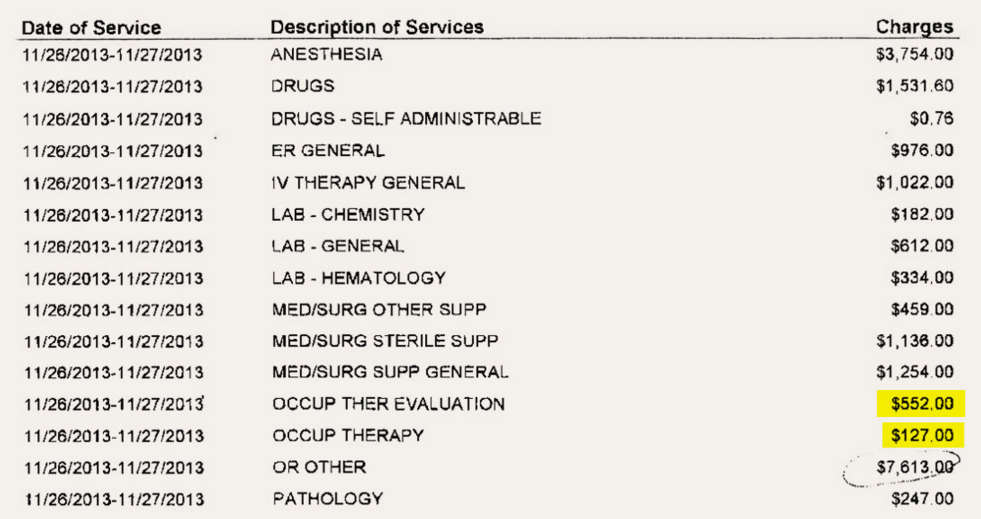
Source: New York Times, “Paying Till It Hurts”
Engaging our medical system is frustrating because of the ambiguity. We want to know what we’re paying for and how much we’re paying. Yet, these basic facts remain elusive. The sophistication of our systems has increased, but thus far, the clarity has not.
Comparable frustration exists for the financially vulnerable. In our country, navigating the web of human services, government programs and charitable support requires advanced problem solving skills.
In Cincinnati, CityLink Center brings 15 city agencies and church volunteers under one roof. One facility hosts this complex web of agencies and surrounds it all by case managers demonstrating Nordstrom-caliber customer service. At CityLink, agencies once separated by dozens of miles are now separated by a few steps. When disadvantaged men and women walk through just one door, they can now meet social workers, financial planners, educators, therapists and job trainers, all with the help of their case manager.

CityLink Center (photo source: Cincinnati Business Journal)
“It’s difficult for someone to walk into a handful of different places and continuously ask for help,” says Johnmark Oudersluys, Executive Director of CityLink. “Here, someone comes in, only has one case manager that knows everything that is going on, and they get to keep coming to a place that has friendly faces and people that remember them.”
Similarly, innovative providers are disrupting the healthcare marketplace. Companies like Healthcare Partners and Blue Cross now pay doctors and nurses based on the quality of their care, based in part on patient feedback, not just the services they provide. Like CityLink, these efforts also revolve around patients’ having one case manager (in this case, a doctor) to help them navigate the web of specialists, hospitals and other healthcare providers. In our complex global marketplace, winning solutions are simple solutions.
When we buy used sneakers from our neighbors, an array of alternatives is met with a simple solution. Near limitless opportunities for exchange abound in our society. Still, the market is ripe for leaders who can leverage boundedness. They distill complexities and ambiguities, making sense of the vast information and opportunities surrounding us. In retail, healthcare and urban ministry, today’s leaders will make the complex simple.